Is The Eiffel Tower Free?
The Eiffel Tower itself is not free to ascend, but the gardens, the esplanade and the best views of it cost nothing. Here is exactly what is free, what is not, and how to see it without spending a euro.
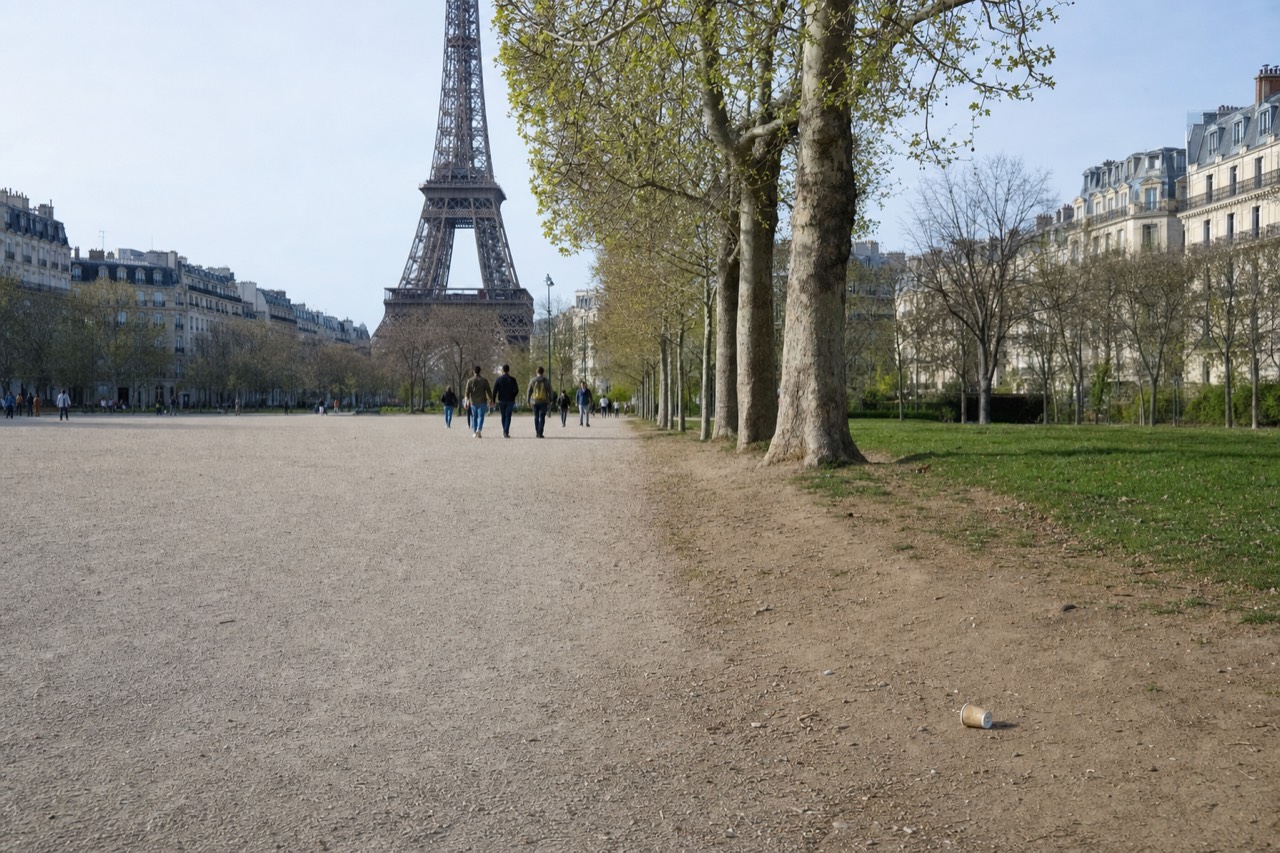
Going up the Eiffel Tower has never been free, and in 2026 the stairs and the lifts are both paid products sold by the tower's operator. What is genuinely free is everything around and beneath it: the gardens, the esplanade under the tower's legs, the Champ de Mars, and the evening sparkle show that runs after dark. Millions of visitors each year enjoy the tower entirely from these free spaces and never buy a ticket at all.
The question is worth answering precisely, because the answer changed shape in 2018. That was when the glass and steel perimeter went up around the tower's base, and a split formed between the free outer gardens and the security-controlled esplanade. The free part did not disappear. It moved.
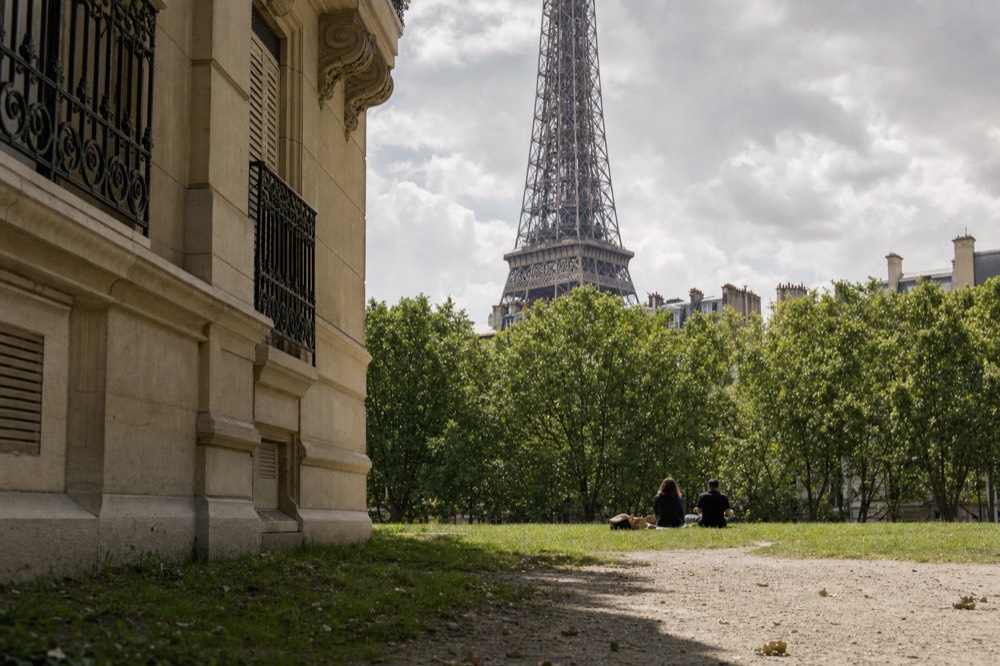
The tower's own FAQ states it plainly: the gardens and the esplanade under the tower are accessible without a ticket and free of charge, entered after security at entry 1 or 2, in the queue for visitors without tickets. The operator's planning page advises allowing 10 to 20 minutes for the first security check, and notes that ticketed and non-ticketed queues are separate. So the honest answer to the question is: the tower is free to approach, free to walk beneath, free to photograph from a dozen angles, and paid only if you want to ride or climb up inside it.
Is The Eiffel Tower Free?
No, ascending the Eiffel Tower is not free: the stairs and the lifts are paid tickets sold by the tower's operator, and there is no free-admission day or free-first-Sunday scheme. But the gardens, the esplanade beneath the tower, the Champ de Mars and the nightly sparkle are all free, and no ticket of any kind is needed to enjoy them.
The distinction matters more than it used to. Before 2018 you could wander straight up to the tower's pillars; today a perimeter funnels everyone through security, but the operator itself confirms that the queue for visitors without tickets leads to free access to the gardens and the esplanade. You are not standing outside a paid attraction looking in. You are standing inside the tower's own free public space, looking up.
One point of honesty about the paid side: the tower's current adult price grid is published by the operator on its own site, and this page does not repeat it, because secondary price tables circulating online do not match the operator's own grid reliably. What can be stated firmly is what the tower has not done. Unlike the Louvre, Sainte-Chapelle and the Palais Garnier, the Eiffel Tower has not adopted two-tier pricing by nationality in 2026: its prices are the same for all visitors, whatever passport they hold (checked September 2026).
That is a genuinely unusual position this year. The Louvre moved to 22 euros for European Economic Area residents and citizens against 32 euros for everyone else from 14 January 2026, and Sainte-Chapelle went to 16 against 22 euros from 12 January 2026. The Eiffel Tower held out. A visitor from outside Europe pays no more at the tower than a Parisian does, which cannot be said of the city's biggest museums.
What Can You Do At The Eiffel Tower Without Paying Anything?
You can walk the gardens on both banks of the tower's legs, stand on the esplanade directly beneath the iron structure, picnic on the Champ de Mars, and watch the hourly evening sparkle after sunset, all for zero euros. The only thing a free visit cannot include is going up.
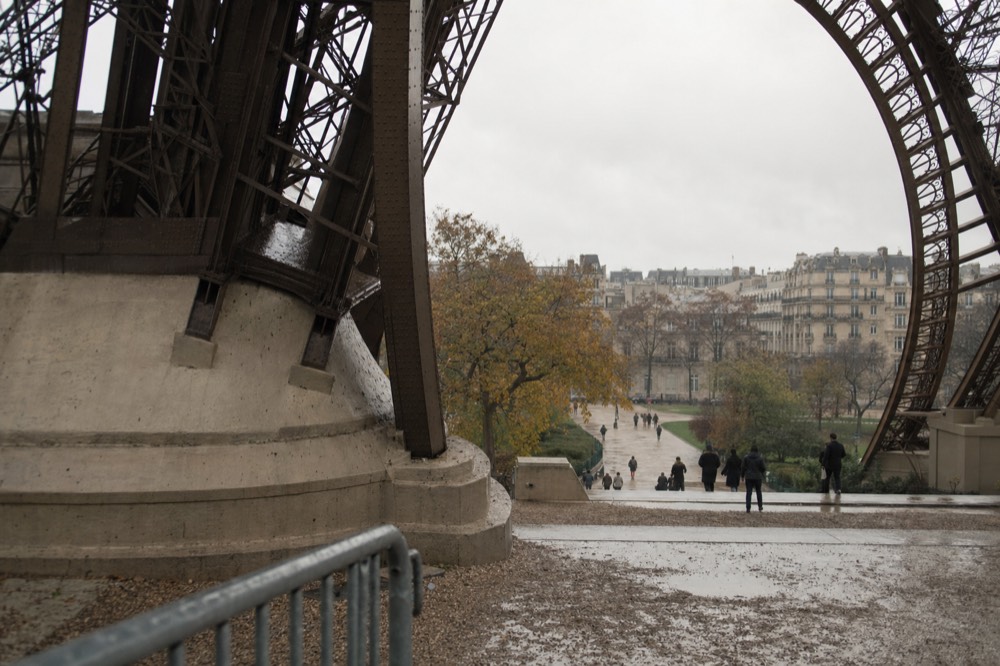
Start with the esplanade. After the security check you can stand under the tower itself, between the four pillars, and look straight up through the iron lattice. This is the view no photograph reproduces, and it costs nothing. The two entries for visitors without tickets are marked 1 SOUTH and 2 EAST, and the operator advises allowing 10 to 20 minutes for the security check at busy times.
Then the gardens. The free gardens run on both sides of the tower, along the Seine toward Trocadero on one side and onto the Champ de Mars on the other, and they are open public parkland, not a ticketed park. The Champ de Mars lawn is the classic free evening spot: spread something on the grass, wait for dark, and the tower sparkles for five minutes at the top of every hour after sunset. No reservation, no queue, no cost. Free things to do in Paris with kids follow the same pattern, since children under 4 ride public transport free, under-18s enter the Louvre free, and eleven City museums never charge for their permanent collections (see Free Paris With Kids).
One seasonal caution worth knowing. The large lawns in front of the tower are often fenced off for regrowth in late winter and early spring, with the fences typically removed around April or early May, as visitors report each year. The gardens and esplanade stay open regardless; only the grass itself rests.
A practical note on the Champ de Mars itself: a December 2025 municipal campaign proposal revived the idea of railings around it, which heritage associations opposed, pointing out that a perimeter already exists around the tower. It was a campaign proposal, not a works project, and the lawn remains open public garden today. Do not let an old headline tell you the free view has been fenced off.
There is also a completely free guided way to see the tower's surroundings: a free walking tour run by an independent local guide and listed on GuruWalk. The Eiffel Monuments walk, 14 Stops, is rated 4.9 across 29 reviews on GuruWalk (checked September 2026), runs 1 hour and 45 minutes in English, and meets by the Arc de Triomphe on Avenue Friedland. It is free, and you pay what you want at the end: there is no fixed price, and each walker gives the guide what they think the walk was worth.
How Does The Eiffel Tower Compare To Other Paris Landmarks On Price?
The Eiffel Tower is the only major Paris landmark that is fully free to approach at ground level while charging only for the ascent, and it is the only big one that has not introduced two-tier pricing by nationality in 2026. Every other headline monument charges at the door, and several now charge foreign visitors more.
The comparison table below shows the 2026 landscape. Figures are the institutions' own published prices (checked September 2026).
| Landmark | Adult entry 2026 | Free routes in |
|---|---|---|
| Eiffel Tower, gardens and esplanade | Free, no ticket | Always, every day |
| Eiffel Tower, ascent | Paid, single price for all nationalities | None |
| Louvre | 22 EUR EEA, 32 EUR others | First Friday evening after 18:00, except July and August; under-18s; EEA 18 to 25 |
| Sainte-Chapelle | 16 EUR EEA, 22 EUR others | First Sundays, January to March and November to December |
| Pantheon | 16 EUR April to September, 13 EUR otherwise | First Sundays, January to March and November to December |
| Arc de Triomphe | 22 EUR high season, 16 EUR otherwise | Tomb of the Unknown Soldier, always; first Sundays in five winter months |
| Sacre-Coeur basilica | Free | Always, 06:30 to 22:30 |
Two rows deserve a second look. The Arc de Triomphe's Tomb of the Unknown Soldier is free to reach without any terrace ticket, a detail almost never listed on free-things pages. And Sacre-Coeur is free every day of the year, 06:30 to 22:30, which makes it open later than almost any other major Paris interior.
The pattern across the table is the real story of 2026: the Louvre, Sainte-Chapelle, the Palais Garnier and Chambord all adopted differentiated pricing, while the Eiffel Tower and the Musee d'Orsay did not (see Can You Visit The Musee d'Orsay For Free?). A parliamentary report confirms the 2026 two-tier pricing was each establishment's own board decision, legally applicable only to non-EEA non-residents. The tower's operator simply chose not to make one.
If your instinct on seeing those prices is to build a day around the free layer instead, the tower is the easiest place to start, and the Arc de Triomphe end of the Champs-Elysees is where the free walking options cluster. The Champs-Elysees Glamour walk is another free walking tour run by an independent local guide and listed on GuruWalk, rated 4.59 across 71 reviews (checked September 2026), running 2 hours in English from Place de la Concorde. It is free, and you pay what you want at the end.
Both of these walks sit inside the same free model: booking costs nothing, no card is taken, and the guide is paid only by what each walker chooses to hand over at the end. For a visitor weighing a paid monument ticket against a free guided walk, that comparison is the whole decision in one sentence.
Can You See The Eiffel Tower Well From A Free Walking Tour?
Yes, and in some ways better than from inside it. A free pay-what-you-want walking tour around the tower's monuments gives you the tower from Trocadero, from the Seine bridges and from below the lattice, with a local guide explaining what you are looking at, and it costs nothing until you decide what to give at the end.
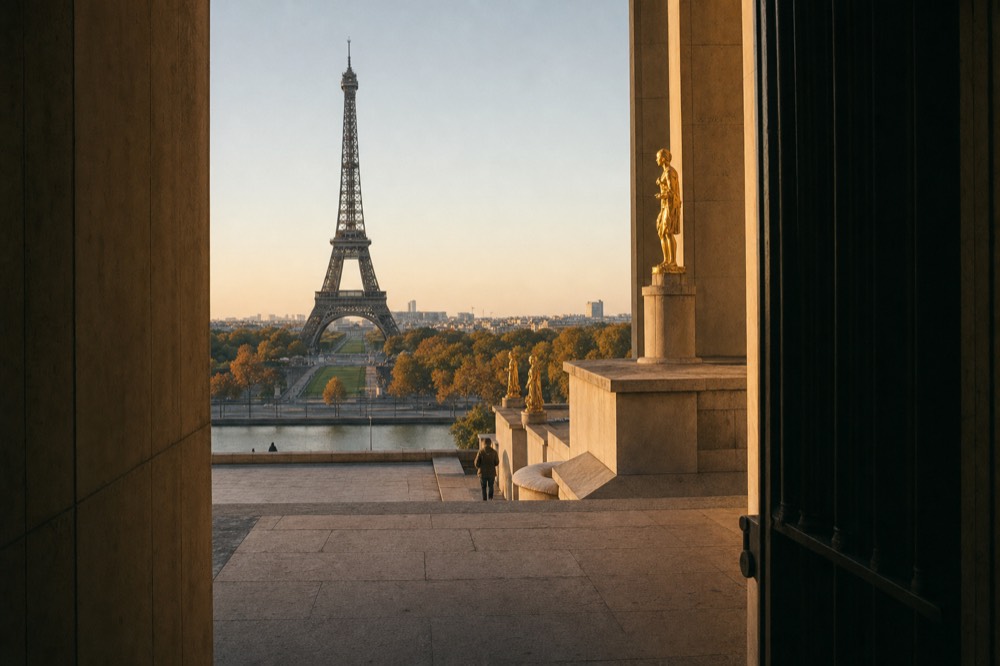
The classic free viewpoints are easy to walk between. Trocadero, across the river, is the postcard angle and costs nothing to stand at. The Pont de l'Alma and the Pont Alexandre III both frame the tower over the water. The Rue de l'Universite, a narrow street in the 7th, gives the famous low view with the tower rising over rooftops. And the esplanade beneath the tower, already covered above, is the only angle that lets you look up through the structure itself.
A guided walk stitches these together with the history: why Gustave Eiffel built a laboratory at the top, how the tower was saved from demolition by radio, what the 19th-century protesters wrote about it. That is the layer a self-directed wander misses, and on a pay-what-you-want walk you choose what that layer was worth to you after the fact, not before.
If you want to go deeper on the free-walk model generally, our guide to free walking tours in Paris explains how the pay-what-you-want system works across the city. For the tower's neighbourhood specifically, the free parks and gardens of Paris include the Champ de Mars and the two bois, all free to enter.
When Is The Best Free Moment At The Eiffel Tower?
The best free moment is the first sparkle after sunset, when the tower's lights flash for five minutes at the top of the hour, and it costs nothing from the Champ de Mars or Trocadero. The second best is early morning, before 09:00, when the gardens are nearly empty and the security queue is short.
The sparkle runs for five minutes at the start of every hour after dark, and locals time picnics to it. Pick your spot a few minutes early, on the Champ de Mars lawn or the Trocadero terrace, and it is the single best free show in Paris. For everything free that the city offers around it, from the sparkle to the lit monuments and the late-opening parks, Free Things To Do In Paris is built exactly around this layer of the city, and our guide to free things to do in Paris at night covers the evening side in full.
One dated correction for anyone planning around Bastille Day: the 2026 fireworks were fired on the evening of Monday 13 July, not 14 July, so that 14 July could be a day of remembrance for the tenth anniversary of the Nice attack. The tower was closed to visitors on 13 July and open on 14 July, and free viewing from the Champ de Mars and Trocadero stayed free, with gates closing when full. If a listicle tells you the fireworks are always 14 July at 23:00, it is describing a year that was not 2026.
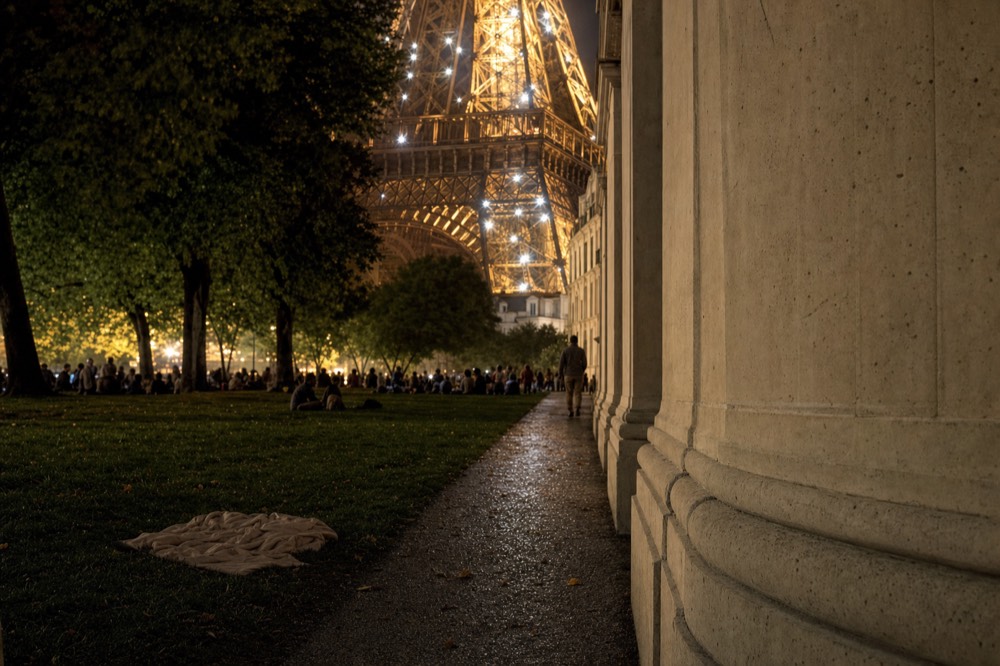
A final honest note on the paid ascent, for balance. The view from the top is real and many people love it, but the queue economics are unforgiving: ticketed visitors book time slots and still wait, and the summit level is small and crowded on clear days. The free layer beneath the tower, the gardens, the esplanade, the lawn and the sparkle, delivers more unhurried time with the tower per euro than any ticket does. As one much-upvoted traveller argument put it, the best free thing in Paris is often sitting somewhere beautiful and watching the city rather than packing in monuments. The Eiffel Tower, seen from below for nothing, makes that case better than anywhere else in the city.
The short answers: going up the tower is paid, everything beneath and around it is free, the tower charges every nationality the same in 2026, and the evening sparkle costs nothing to watch. The details below cover the esplanade access, the Champ de Mars, the pricing landscape and the free walking tours that show you the tower.
Common Questions About Whether The Eiffel Tower Is Free
Is the Eiffel Tower free?
No, going up the tower is not free: the stairs and lifts are paid tickets. But the gardens, the esplanade beneath the tower, the Champ de Mars and the nightly sparkle are all free, and the tower's own FAQ confirms that no ticket is needed for them.
Can you walk under the Eiffel Tower without a ticket?
Yes. The gardens and the esplanade under the tower are free of charge and accessible without a ticket, entered after a security check at entry 1 or 2, in the queue for visitors without tickets. Allow 10 to 20 minutes for security at busy times.
Is the Champ de Mars free?
Yes, the Champ de Mars is an open public garden and costs nothing. A 2025 proposal to fence it was a municipal campaign idea, opposed by heritage associations and not implemented. The lawn is sometimes closed for regrowth in late winter, reopening around April or early May.
Does the Eiffel Tower charge foreign visitors more in 2026?
No. Unlike the Louvre, Sainte-Chapelle and the Palais Garnier, the Eiffel Tower has not adopted two-tier pricing by nationality. Its prices are the same for all visitors (checked September 2026).
When does the Eiffel Tower sparkle, and is it free to watch?
The tower sparkles for five minutes at the top of every hour after dark. Watching from the Champ de Mars or Trocadero is completely free.
Is there a free walking tour that shows you the Eiffel Tower?
Yes. The Eiffel Monuments walk, 14 Stops, is a free walking tour run by an independent local guide and listed on GuruWalk, rated 4.9 across 29 reviews (checked September 2026). It is free, and you pay what you want at the end.