What To Do In Paris At Night For Free
Paris after dark costs nothing if you know which doors stay open, which parks never close and which streets are at their best once the crowds go home. This guide covers the lit monuments, the night walks, the free viewpoints and the late-night transport maths, with every hour and rule checked against the official sources.
Short answer
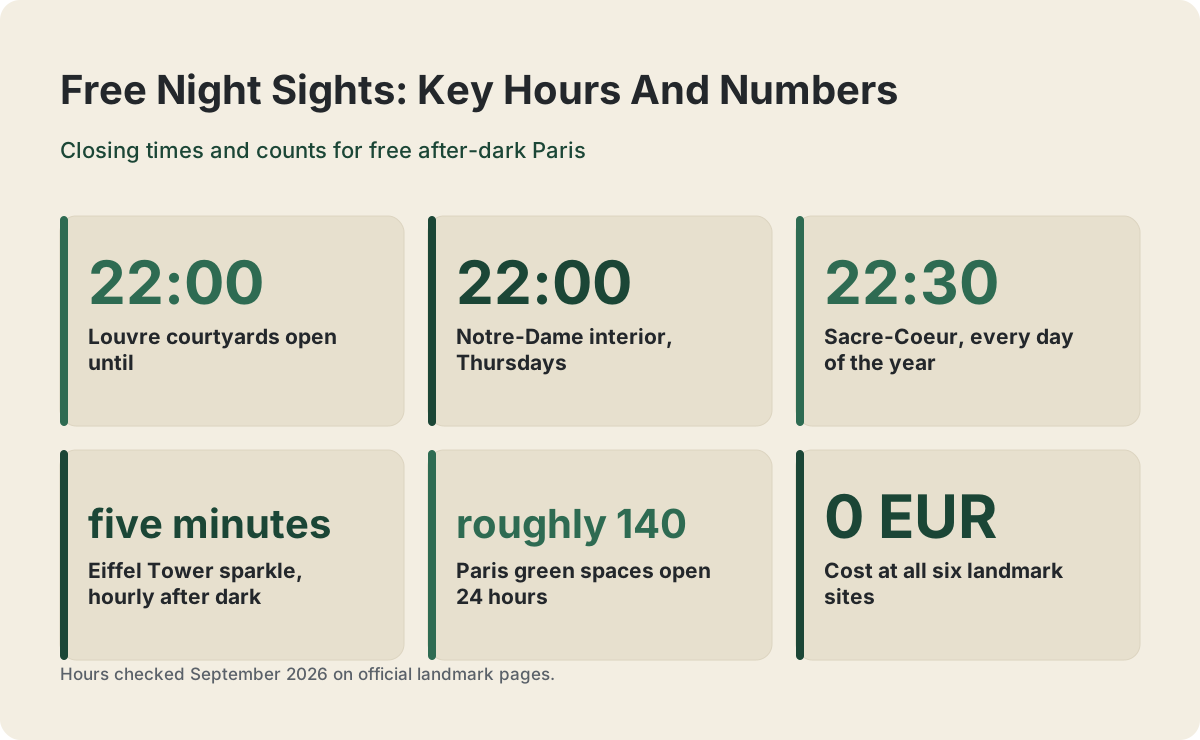
Paris stays free late: Sacre-Coeur is open until 22:30, the Louvre courtyards until 22:00, Notre-Dame until 22:00 on Thursdays, and about 140 city parks never close at all. Free evening walking tours run on a pay-what-you-want basis, and Noctilien night buses run all night on a standard bus ticket at 2.05 EUR (checked September 2026).
Paris changes character after sunset, and almost none of the best of it is behind a ticket office. The crowds thin, the monuments switch on their lighting, several of the biggest churches keep their doors open into the evening, and a surprisingly large slice of the city's parkland never closes at all. This guide walks through what is genuinely free after dark in 2026: the lit landmarks you can stand next to for nothing, the pay-what-you-want evening walks, the parks that stay open around the clock, the free rooftop views and the practical question of getting home late without spending much. For fun after dark without spending anything, the same riverside lounging, pay-what-you-want walking tours and night openings that fill Parisians' free evenings by day carry straight on into the night (see Fun In Paris).
One framing note before the detail. Several of the evening walks recommended here are free walking tours run by independent local guides and listed on GuruWalk. They cost nothing to book, and at the end each walker gives the guide what they think the walk was worth. That model is explained properly on our main free walking tours in Paris guide, which sits alongside this one at Free Things To Do In Paris.
Is Paris Safe And Walkable After Dark?
Yes, in the central tourist areas Paris is broadly safe to walk at night, and the historic core is compact enough that most evening routes are 20 to 45 minutes on foot. The official advice is about pickpockets and phone snatching in crowded places, not about staying indoors, so the sensible plan is a crossbody bag, the phone pocketed, and the lit main streets over empty side roads. The UK foreign office notes thieves operating on the metro and RER lines, and the US Embassy names the areas around the Eiffel Tower, Notre-Dame and the Champs-Elysees as the places where pockets get picked, which is exactly where the free night sights are. That is not a reason to skip them. It is a reason to carry one card, one piece of ID and modest cash, and to keep the bag across your body rather than on a shoulder.
The walking distances themselves are short. The Louvre to Notre-Dame is roughly 1.5 km, about 20 minutes along the Seine. Notre-Dame to the Latin Quarter is about 500 metres, so an evening loop of the two islands and the left bank quays is a comfortable hour. A realistic central sightseeing day on foot is 8 to 12 km, and an evening stroll is a fraction of that.
Night is also when the city feels most like itself for free. The stone of the Ile de la Cite glows under floodlight, the Eiffel Tower sparkles on the hour, and the benches along the Seine fill with people who paid nothing to be there. If you want the daytime versions of the same neighbourhoods, our Montmartre guide covers the hill in daylight.
Which Landmarks Stay Free And Lit Up At Night?
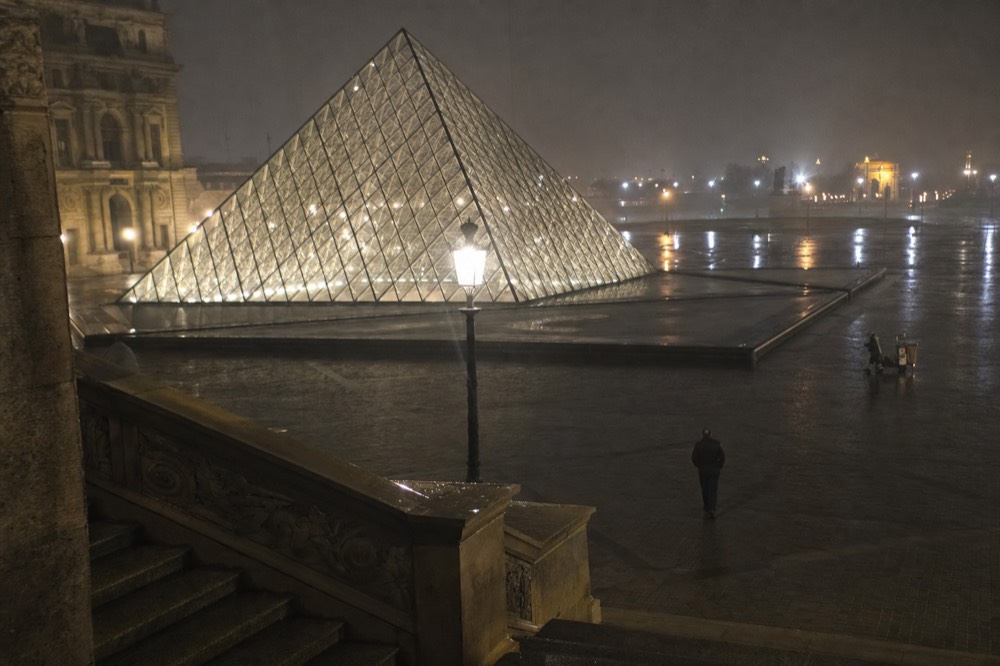
The best free night sights are the Louvre's courtyards, open until 22:00, the Eiffel Tower gardens and esplanade, Notre-Dame's interior until 22:00 on Thursdays, and Sacre-Coeur until 22:30 every single day of the year. None of these needs a ticket, a booking or a queue for a paid attraction, and all four are floodlit after dark. The Louvre's own admission page states that the Cour Napoleon is open 07:30 to 22:00 and the Cour Carree 07:30 to 19:45, both free (checked September 2026). The pyramid at night, with the courtyards almost empty, is one of the great free sights of the city, and it costs exactly nothing.
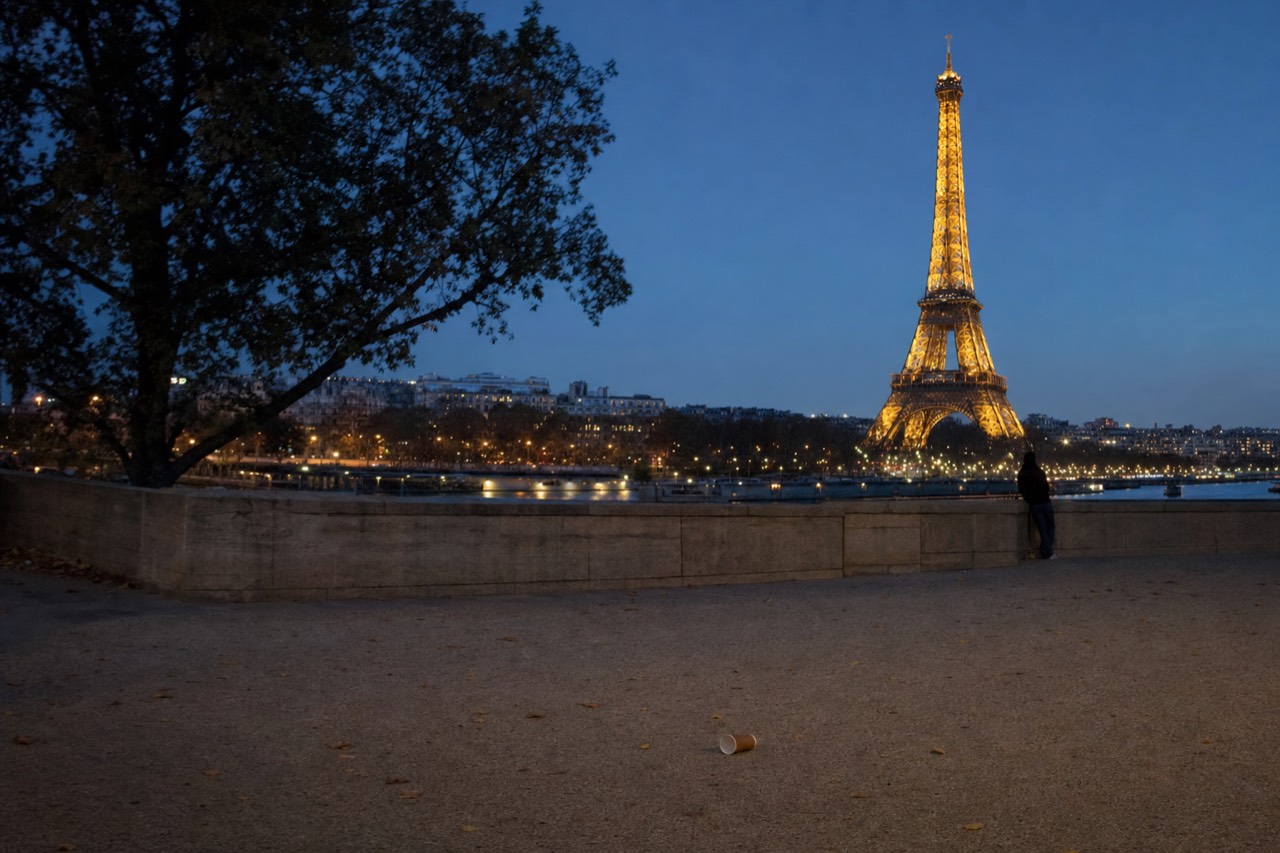
The Eiffel Tower's answer to the night question is the gardens and the esplanade beneath it. The tower's own FAQ confirms both are accessible without a ticket, entered through the security perimeter at entries 1 and 2 (checked September 2026). The tower's sparkle runs for five minutes at the start of each hour after dark, and the Champ de Mars lawn in front of it is a free public garden, though the large lawns are often fenced for regrowth in late winter.
Notre-Dame keeps long evening hours: 07:50 to 19:00 on most weekdays, and until 22:00 on Thursdays, with free entry and an optional free reservation that only opens a day or two ahead (checked September 2026). The Sunday organ recital at 16:00 is listed on the cathedral's own hours page as free entry. Sacre-Coeur is the late-night champion: the basilica's own site states it is open every day of the year, 06:30 to 22:30, admission free for everyone (checked September 2026). Between 10:30 and 17:00 the basilica warns of a 10 to 15 minute wait, but in the evening the queue is usually short.
| Landmark | Free at night? | Evening hours | What it costs |
|---|---|---|---|
| Louvre courtyards (Cour Napoleon) | Yes, always | Until 22:00 (checked September 2026) | 0 EUR |
| Eiffel Tower gardens and esplanade | Yes, after security | Until the sparkle hour, garden hours vary | 0 EUR |
| Notre-Dame interior | Yes, always | Until 22:00 Thursdays, 19:00 other weekdays (checked September 2026) | 0 EUR |
| Sacre-Coeur basilica | Yes, every day of the year | 06:30 to 22:30 (checked September 2026) | 0 EUR |
| Tuileries Garden | Yes | 07:00 to 21:00 mid-September, seasonal | 0 EUR |
| Louvre free first-Friday nocturne | Yes, one evening a month | After 18:00, booking mandatory | 0 EUR |
One monthly exception deserves its own line: the Louvre is free for all visitors on the first Friday of the month after 18:00, except in July and August, and booking that evening is mandatory through the museum's own nocturne page, with slots released only days ahead. The remaining 2026 dates are 2 October, 6 November and 4 December. There is no first-Sunday free day at the Louvre, in any season, and there has not been one for years; our is the Louvre free guide unpacks that in full.
If you would rather have the lit-centre landmarks explained than just looked at, three free walks cover this exact territory on a pay-what-you-want basis.
What Dark History And Ghost Walks Run In The Evening?
The Dark History and Ghosts walk is a two-hour English-language evening walk rated 4.5 across 38 reviews on GuruWalk (checked September 2026), meeting at the Church of Saint-Germain l'Auxerrois, right beside the Louvre. It covers executions, hauntings and the city's grimmer centuries, it costs nothing to book, and you pay the guide what you want at the end. The meeting point is well chosen for a night walk: Saint-Germain l'Auxerrois is one of the oldest churches in central Paris, a few steps from the Cour Napoleon, so the route can move from the Louvre's lit courtyard into the medieval streets of the 1st and 4th arrondissements while the lighting still does half the storytelling.
Dark history suits the evening for a practical reason as well as an atmospheric one. The crowds that fill the Place du Chatelet and the Ile de la Cite by day are gone by 21:00, so a guide can stop a group on the Pont Neuf or in a dark courtyard without blocking half the pavement. The stories that suit a bright afternoon, the architecture and the art history, give way after dark to the material that genuinely belongs to the night: the former prison streets, the sites of the September Massacres, the legends attached to particular buildings.
A ghost walk is also the cheapest possible way to get a guided experience of central Paris at night, because the model removes the fixed price entirely. There is no fee, no deposit and no card taken at booking. The guide's income is what the group hands over at the end, which means a walker on a tight budget can join, learn the route, hear the stories and give what the evening was worth to them. Our post on whether free walking tours in Paris are worth it weighs the model honestly.
Where Can You Walk Hidden Paris After Sunset?
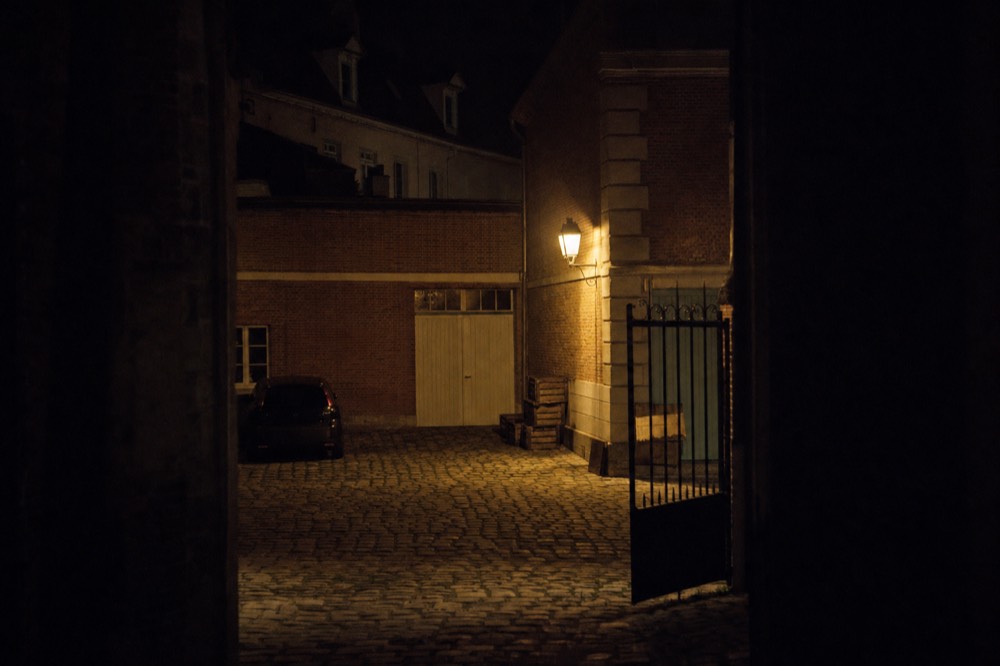
Two free evening walks specialise in the hidden city: the Time Machine Hidden-Gems Walk, rated 4.98 across 273 reviews on GuruWalk (checked September 2026), runs 1 hour 45 minutes from the Hotel de Ville forecourt, and the Stories and Secrets Landmarks Walk, rated 4.87 across 249 reviews (checked September 2026), runs 2 hours 30 minutes from the Marais. Both are English-language, pay-what-you-want and at their best once the day-trippers have left. The hidden-gems format works in the evening because the passages, courtyards and small squares of the Marais and Paris Centre are at their quietest after 20:00, and a guide can hold a group's attention on a spot that would be a scrum at midday.
The Time Machine walk starts on the parvis in front of the Hotel de Ville, which is itself worth knowing at night: the square carries the city's urban forest, inaugurated in June 2025, roughly 2,500 square metres of planted ground with about 150 trees, and the gothic facade is floodlit. From there the route works through the layers of the old city, the medieval street plan, the passages and the remnants most visitors walk past between the two big museums.
The Stories and Secrets Landmarks Walk takes the longer format, two and a half hours, and starts in the Marais, the neighbourhood whose aristocratic hotels and Jewish quarter streets are the standard evening-walk territory of Parisians themselves. The Marais at night is the free-Paris classic: the Place des Vosges, the oldest planned square in the city, is free, lit, and open late, and the arcades echo after dark in a way they never do at noon. Our free things to do in Le Marais guide covers the same streets in daylight hours.
One honest note on planning: these walks are free to book but booking is expected, and a walk with too few registered walkers may not run. Reserve a place, which costs nothing, and note the meeting point and language when you do, since several operators use the same squares with different umbrellas and vests.
Which Parks And Gardens Stay Open All Night?
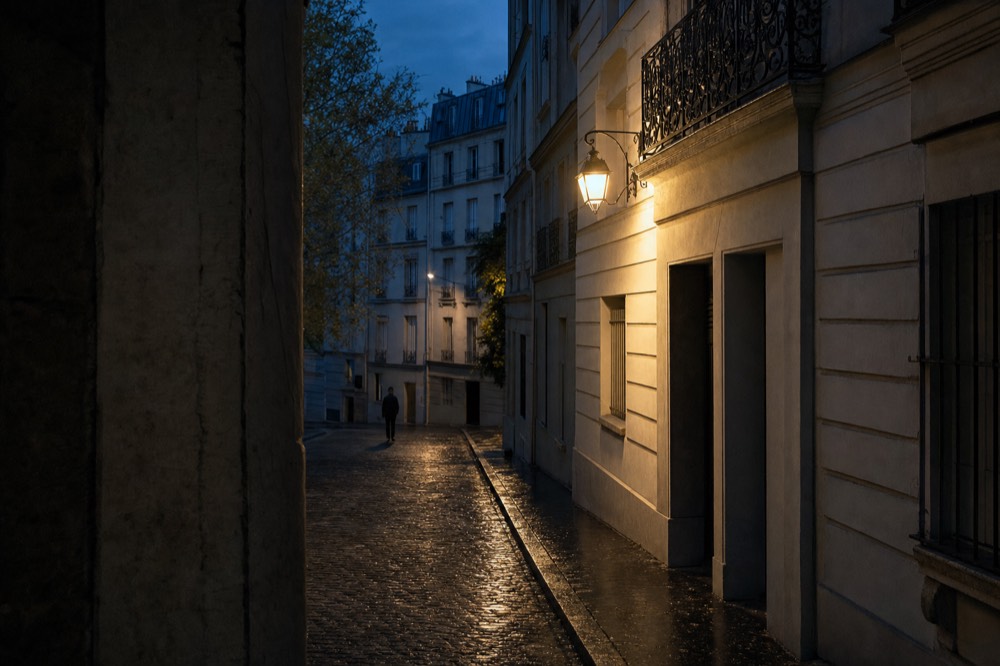
About a quarter of the 550-plus parks, gardens and squares managed by the City of Paris are open 24 hours a day, all year, roughly 140 green spaces that never close, including Buttes-Chaumont and Montsouris. The big state-run gardens are the opposite: the Tuileries, the Luxembourg, the Palais-Royal and the Jardin des Plantes all close at night, so the all-night list and the famous-garden list barely overlap. The City's own nocturne page is the source for the quarter figure (checked September 2026), and it is the single most useful fact on this page for anyone planning a summer night.
The split matters because most visitors assume the famous gardens are the ones to sit in. They are not, after dark. The Jardin du Luxembourg, run by the Senate, closes at sunset-adjacent hours that change twice a month: 07:30 to 19:45 for the first half of September 2026, for example (checked September 2026). The Tuileries stays open until 23:00 in June, July and August. But Buttes-Chaumont, Montsouris, Monceau and Clichy-Batignolles open at 07:00 all year, and the 24-hour subset never locks a gate at all.
| Space | Open all night? | Notes |
|---|---|---|
| Parc des Buttes-Chaumont, 19th | Yes, 24 hours | Island and temple closed for works, about 95 percent of the park open |
| Parc Montsouris, 14th | Yes, 24 hours | Large, lamplit, popular with evening runners |
| Parc de Belleville, 20th | No, closes 20:30 (checked September 2026) | Belvedere view is best at sunset, before closing |
| Jardin du Luxembourg, 6th | No | Hours shift twice monthly with sunset |
| Tuileries Garden, 1st | No | 07:00 to 23:00 in June to August |
| Square Louise Michel, 18th | Summer late opening only | Below Sacre-Coeur, view of the lit city |
The summer late-opening scheme is worth watching for too. In 2026 the City kept fourteen gardens that normally close around 21:00 open until midnight through July and early September, and during the August heatwave most parks and gardens were kept open all night. That is a seasonal announcement rather than a standing rule, so check the City's pages for the year you visit. Two rules apply everywhere: picnics are expressly allowed as long as the place is left clean, and drinking alcohol is forbidden in City parks, so leave the wine for a licensed terrace.
What Free Events Light Up The Paris Night?
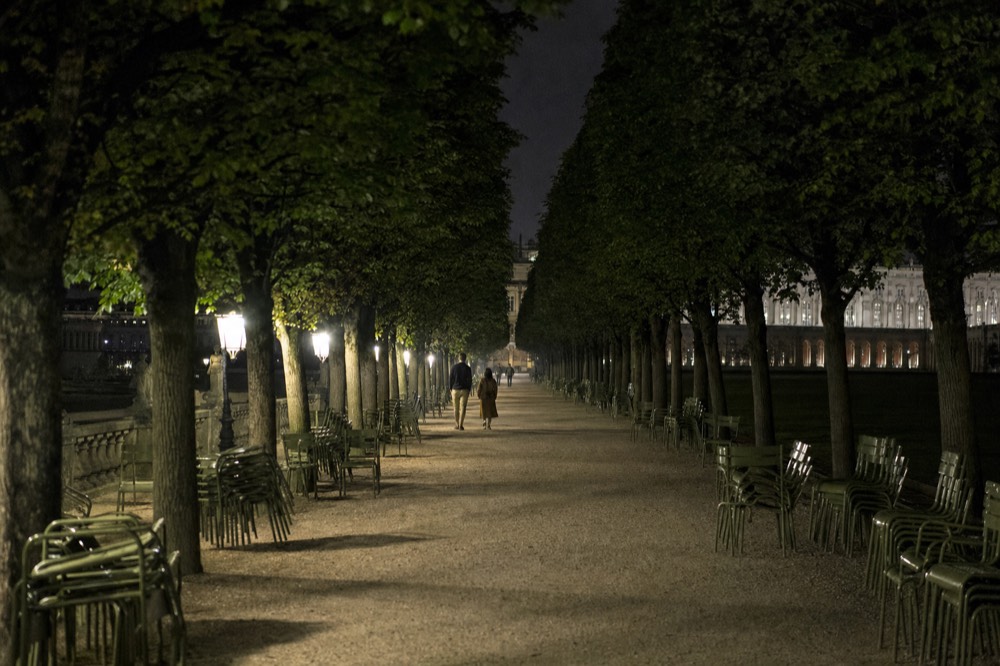
The free night calendar in 2026 runs from Nuit Blanche in June, a free all-night art trail that drew 123 artistic projects citywide, through the Fete de la Musique on 21 June, to the Techno Parade on 19 September and the Journees du Patrimoine on 19 and 20 September, when the Arc de Triomphe is free until 23:00. Every one of these is genuinely free to attend, though some individual venues require booking. Nuit Blanche is the headline: the 2026 edition ran on the night of 6 June, and it is in June now, not October, a detail a remarkable amount of old advice still gets wrong. The route in 2026 started on the Hotel de Ville forecourt and ran into the Marais, with the Grand Palais, the Conciergerie and the Musee Picasso among the associated venues.
The Fete de la Musique on 21 June is the night the whole country plays for free, and Paris is loud with it: street concerts, courtyard sets and square raves, all free to walk among. The transport that night is not free, a special 4.30 EUR pass covers the late service instead (checked September 2026) (see Is Public Transport Free In Paris?). The Techno Parade returned on 19 September 2026 after two skipped years, free and open. And the Journees du Patrimoine that same weekend is the one weekend of the year when buildings that are never public, the Elysee, the ministries, open their doors, with the Arc de Triomphe free from 10:00 to 23:00 with no booking. Getting between the stages can also be done by bike, since Velib is open to anyone with a smartphone and a card, and a rider can be rolling within minutes, though the famous free first half hour belongs to a plan most tourists never buy (see Velib For Tourists).
Bastille Day deserves its correction here too. In 2026 the Eiffel Tower fireworks were moved to the evening of Monday 13 July, not 14 July, so that 14 July could be a day of remembrance for the tenth anniversary of the Nice attack. Watching from the Champ de Mars and the Trocadero stayed free, with gates closing when full. The firemen's balls, a staple of old free-Paris lists, were all cancelled in 2026 for heatwave and fire risk, so do not plan a trip around them. Our free events guide carries the full calendar.
Where Can You See The City From Above Without Paying?
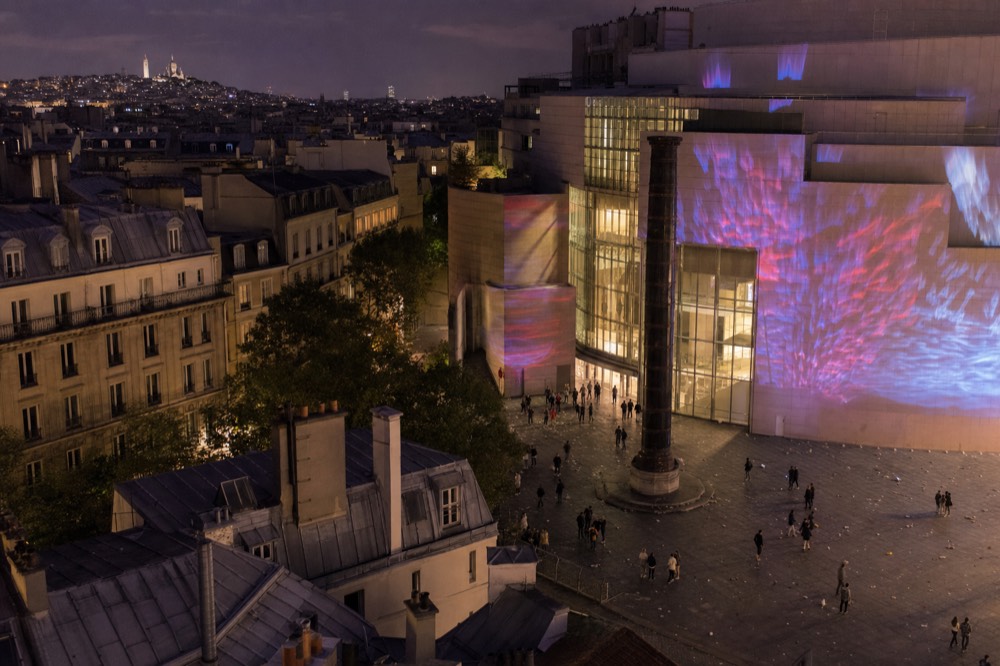
The two reliable free night viewpoints are the Galeries Lafayette rooftop terrace on the 8th floor, free during store hours and open to 19:30 on the French page's hours (checked September 2026), and the Parc de Belleville belvedere, free until the park's 20:30 close, which lands you a panorama of the whole eastern city at sunset and just after. The Galeries Lafayette terrace needs no ticket and no reservation, and it looks straight at the Opera Garnier with the Eiffel Tower behind it. The store's own English and French pages disagree by 30 minutes on the closing time, so arrive before 19:30 to be safe, and note the terrace can close in bad weather.
The Parc de Belleville belvedere, at the top of the park in the 20th, is the free viewpoint locals actually use. The park closes at 20:30 in September 2026 (checked September 2026), so the play is to arrive for the last hour of daylight and watch the city lights come on. It is a climb, and the surrounding streets are ordinary Belleville rather than postcard Paris, which is exactly why it is pleasant.
Two cautions from the 2026 record. The BHV Marais rooftop is no longer a free viewpoint: its 6th and 7th floor is now a paid bar and restaurant, so ignore any older listicle that sends you there for a free view. And the Tour Montparnasse observatory, the old "pay for the view with the Eiffel Tower in it" option, closed on 31 March 2026 for a multi-year renovation, so the free viewpoints are not competing with it any more. The Institute of the Arab World's panoramic terrace is free but daytime only, 10:00 to 18:00, so it belongs on a daytime list, not this one.
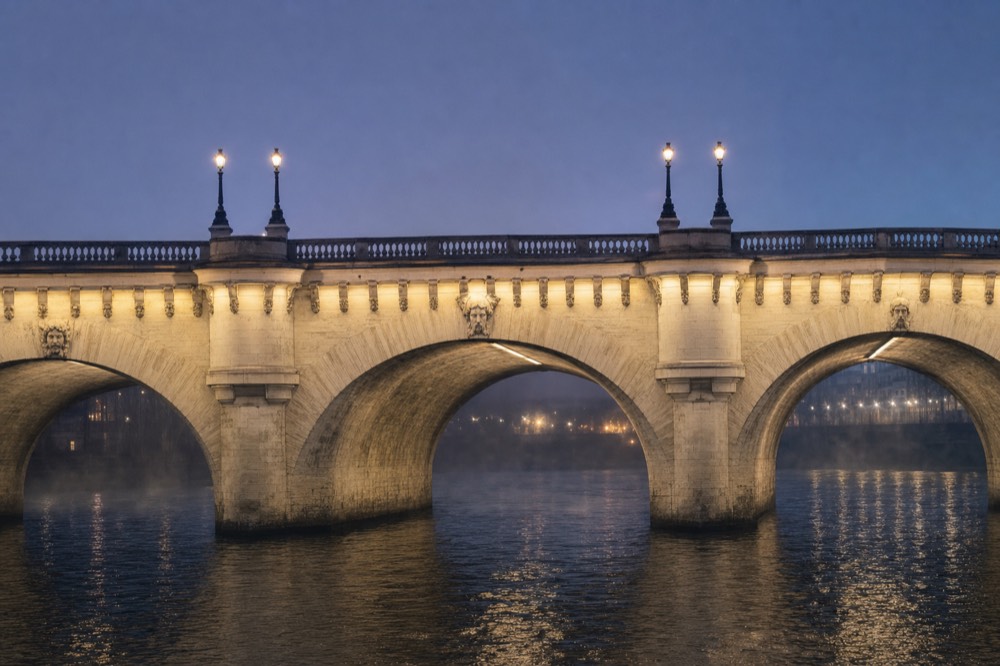
The cheapest "viewpoint" of all, of course, needs no roof at all. The Seine quays are free, walkable all night, and the river does the reflecting for you: the Pont Alexandre III, the Pont Neuf and the stretch between the Louvre and Ile de la Cite are the classic lit-water walk, and they cost nothing at any hour.
How Do You Get Home Late Without Spending Much?
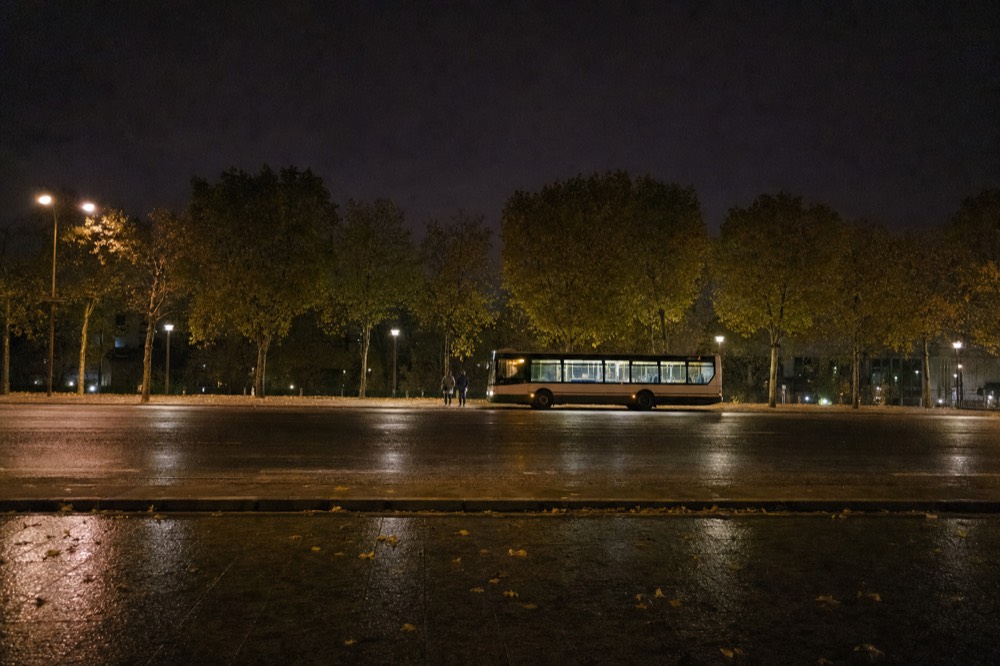
The metro stops running shortly after midnight on weeknights, but the Noctilien night buses run all night on the standard bus-tram ticket at 2.05 EUR, and the whole network is free from 17:00 on 31 December to 12:00 on 1 January each recent year, airports excepted (checked September 2026). So the late-night answer is either walk, because the centre is compact, or a single 2.05 EUR night bus. The Noctilien lines fan out from Chatelet across the whole region roughly every 20 to 60 minutes depending on the line and the hour, and the bus-tram ticket is the same product all night.
The ticketing detail that catches people is that metro and bus are two separate products in 2026. A metro ticket does not transfer to a bus, and using one on a bus can draw a fine. The bus-tram ticket is 2.05 EUR, the metro-train-RER ticket 2.55 EUR, and there is no carnet discount any more: ten metro rides cost 25.50 EUR because the ten-pack was abolished (checked September 2026). If you plan a big night, load tickets onto a phone or a Navigo Easy card, which costs 2 EUR for the card itself.
| Option | Cost | When it runs |
|---|---|---|
| Walking the central loop | 0 EUR | Always |
| Noctilien night bus | 2.05 EUR per ride (checked September 2026) | All night, every night |
| Metro last services | 2.55 EUR per ride (checked September 2026) | Until about 00:15 to 01:15 depending on line |
| New Year's Eve network | Free, airports excepted | 17:00 on 31 December to 12:00 on 1 January, most recent instance |
| Licensed taxi | Metered | Order one or use the rank, never accept a street offer |
The safety line on late transport comes straight from the official advice: never accept a ride from someone who offers their services in the street, and use the official taxi rank or an app. A licensed Paris taxi carries the "Taxi Parisien" sign on the roof. If you are staying anywhere within the 1st through 8th arrondissements, the honest answer is that most late-night destinations are a 30-minute walk, and the walk itself is the free activity.
If an evening walk through the lit centre is the shape of your night, these three free tours are the ones that fit it best, each run by an independent local guide and listed on GuruWalk, free to book with the tip at the end.
The questions below cover the six things readers ask most about free nights in Paris: safety after dark, what the Eiffel Tower costs at night, how the pay-what-you-want walks work, the Louvre's evening rules, the parks that never close and the late-night journey home. Each answer gives the current hours, prices and rules, with volatile figures marked as checked for September 2026.
Common Questions About Free Nights Out In Paris
Is Paris safe to walk around at night?
In the central tourist areas, yes. The official warnings are about pickpocketing and phone snatching in crowded places, not violent crime, and the lit main streets of the 1st through 8th arrondissements are busy well past midnight. Keep the bag across your body, keep the phone pocketed, and carry only what you need for the evening.
What is free at the Eiffel Tower at night?
The gardens and the esplanade under the tower, entered through the security perimeter without a ticket. The tower sparkles for five minutes at the start of each hour after dark, and the Champ de Mars lawn in front is a free public garden, though sections of lawn are often fenced for regrowth in late winter.
Do I have to pay anything when I book a free evening walking tour?
No. Booking is free, no card is taken and no deposit is charged. The walk is pay-what-you-want: at the end each walker gives the guide what they think the evening was worth. Reserve a place anyway, because a walk with too few registered participants may not run.
Is the Louvre free at night?
On the first Friday of each month after 18:00, except July and August, yes, and booking that evening is mandatory through the museum's own nocturne page, with slots released only days ahead. The remaining 2026 dates are 2 October, 6 November and 4 December. On every other evening the courtyards are free and open until 22:00, but the museum inside is not.
Can you sit in Paris parks at night?
In about 140 of the city-managed parks and squares, yes, because they are open 24 hours a day all year, including Buttes-Chaumont and Montsouris. The famous state-run gardens, the Luxembourg, the Tuileries, the Palais-Royal, all close at night. Picnics are allowed in city parks, but drinking alcohol there is forbidden by the city's own regulation.
How do I get back to my hotel after the metro closes?
Walk if you are central, since most evening distances are under 45 minutes, or take a Noctilien night bus from Chatelet or another hub on a 2.05 EUR bus-tram ticket (checked September 2026). The buses run all night. Use an official taxi rank or an app if you need a car, and never accept a ride offered on the street.