Can Tourists Use Velib In Paris?
Yes, tourists can use Velib in Paris. Here is how the plans work in 2026, what a visitor actually pays, and how a bike compares with the metro on a cheap Paris trip.
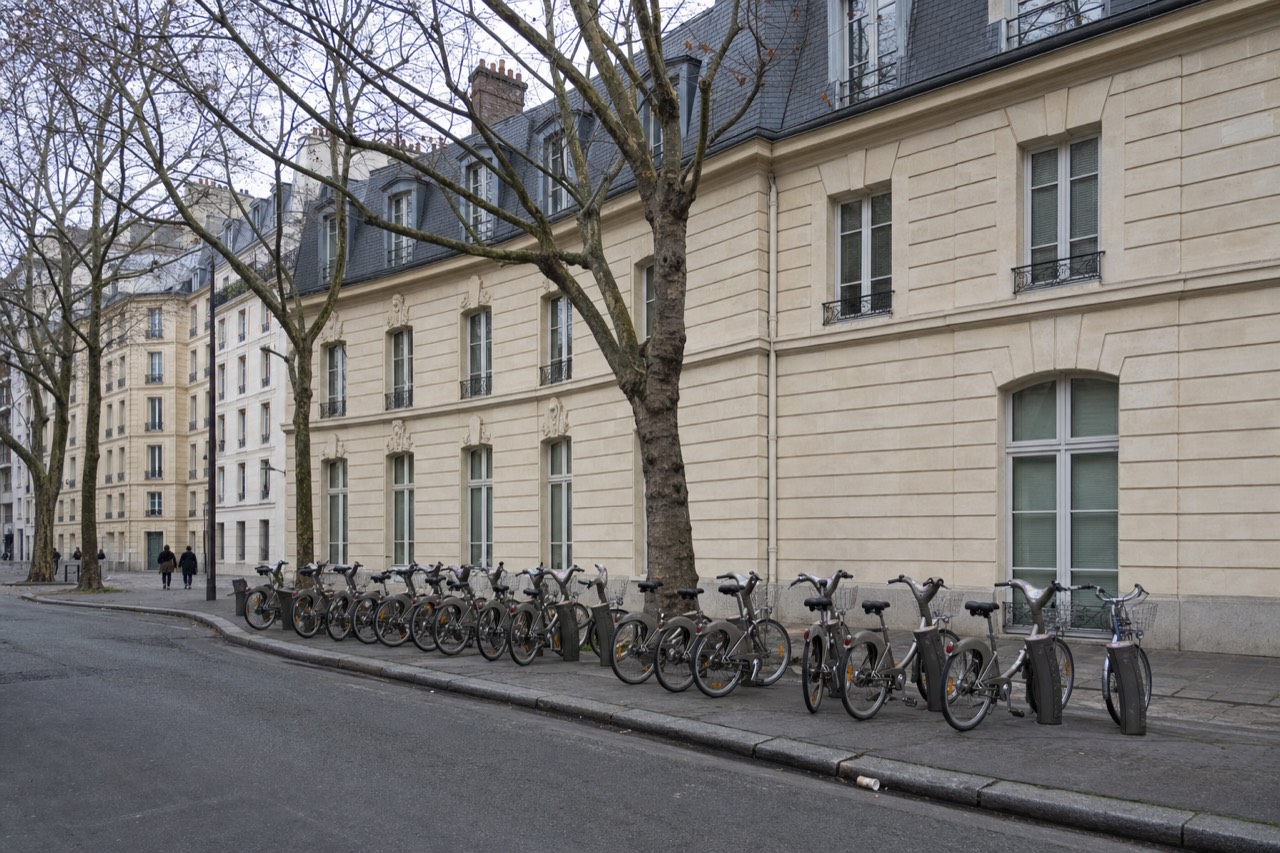
Velib, the Paris bike-share system, accepts anyone who can install its app and pay with a bank card, and there is no residency requirement, no French phone number and no local ID check standing between a visitor and a bike. That is the short answer, and it has been true for years. What trips tourists up is not access but arithmetic: the plan a visitor naturally picks does not include the free first half hour people remember from guidebooks, and the plan that does include it carries a monthly fee. Get that one decision right and Velib becomes one of the cheapest ways to move across central Paris, alongside the free walking tours this site catalogues. Get it wrong and a day of riding can quietly cost more than a day pass on the metro.
Can Tourists Use Velib In Paris?
Yes, tourists can use Velib in Paris without any residency requirement: registration happens in the app or at a docking station with a bank card, and bikes unlock in seconds. The real question is which plan to pick, because the pay-per-ride options start at 1 EUR for a mechanical bike and the famous free first half hour only exists on a subscription that costs money.
The system is run for the city and open to everyone, Parisians and visitors alike. There is no French address to prove, no local bank account needed and no age gate beyond the obvious one of being old enough to ride safely in traffic. Registration is done either at the docking-station terminal or, far more easily, in the app, and a standard international payment card works. Most visitors will never touch the terminal at all: the app shows a map of stations, reserves a bike, and unlocks it with a tap.
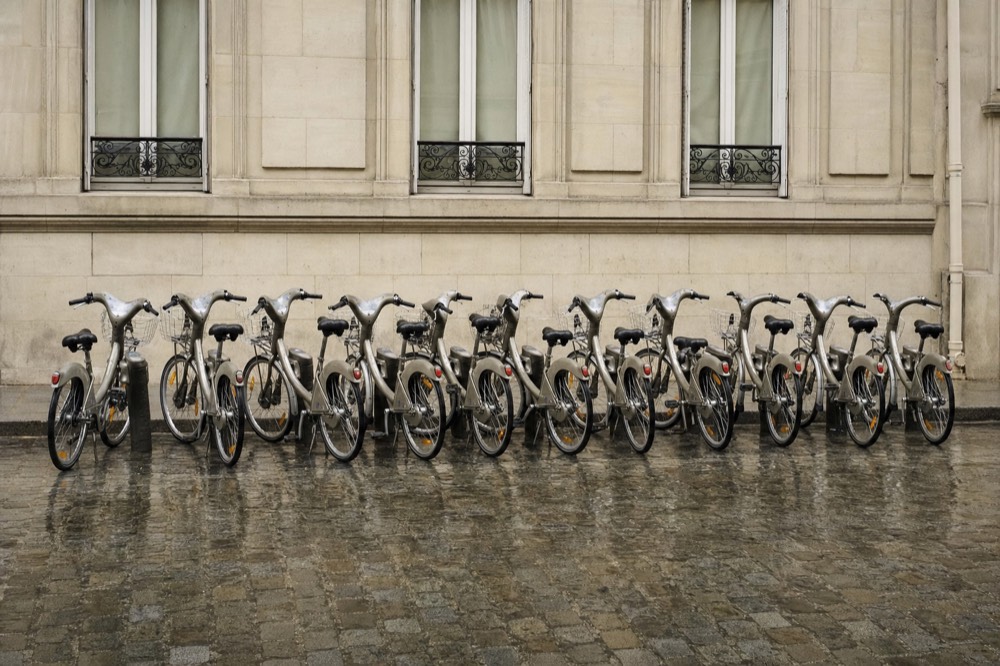
Two practical points shape everything else. First, Velib is a docking system, so your ride ends when you dock again, not when you stop pedalling, and the clock keeps running until the bike is properly locked into a slot. Second, the fleet is mixed: green-liveried mechanical bikes and blue electric ones, and they are priced differently on every plan. An electric bike is heavier to pedal unassisted and its battery assistance cuts out below a certain charge, so checking the battery indicator on the dock or in the app before you unlock saves a frustrating ride.
The question this site gets most often is whether Velib is free. It is not, and the honest version of the pricing story follows. But before the numbers, one framing point: a bike is not competing with a walking tour, it is competing with a metro ticket, and on that comparison it often wins. A single metro journey costs 2.55 EUR (checked September 2026), while a short mechanical ride on the right plan can cost less than half that.
For a visitor planning days around the city, pairing a bike with a free guided walk works well: ride between neighbourhoods, then walk them properly with someone who knows the stories. The walks above, like every walk in this site's directory, are free walking tours run by independent local guides and listed on GuruWalk, not products this site operates. You reserve a place for free and pay the guide what you think the walk was worth at the end.
How Much Does Velib Cost For A Visitor In 2026?
A tourist has three real options: a free-to-hold V-Libre account where each mechanical ride costs 1 EUR for up to 30 minutes, a single Ticket-V ride at 3 EUR for 45 minutes, or the V-Plus subscription at 4.30 EUR a month which makes the first 30 minutes on a mechanical bike genuinely free (checked September 2026). The famous free half hour belongs only to the paid subscription.
The current tariff structure, in force since 12 August 2025 with no January 2026 increase announced, looks like this.
| Plan or ticket | What you pay | Mechanical bike | Electric bike | Best for |
|---|---|---|---|---|
| V-Libre (pay-as-you-go) | 0 EUR a month, 6 EUR one-off registration fee | 1 EUR for 0 to 30 minutes, then 1 EUR per extra 30 minutes | 3 EUR for 0 to 45 minutes | A visitor riding occasionally |
| V-Plus (subscription) | 4.30 EUR a month | First 30 minutes free, then standard rates | Discounted first window | Anyone riding most days of a week-long trip |
| Ticket-V (single ride) | 3 EUR per ride | One ride up to 45 minutes | One ride, electric supplement applies | One-off spontaneous rides, no account |
Read the table the way a short-stay visitor should. If you are in Paris for three days and will ride maybe four times, V-Libre with its 6 EUR registration fee plus 1 EUR per short mechanical ride totals around 10 EUR, cheaper than any pass and cheaper than the same number of metro journeys. If you are staying a week and will ride daily, V-Plus at 4.30 EUR pays for itself quickly because every first half hour is free. The single Ticket-V is the convenience option: no account, one payment, one ride, but at 3 EUR it is the worst value per minute of the three.
The trap is the electric bike on V-Libre. At 3 EUR for the first 45 minutes it is triple the mechanical price, and many central stations hold mostly electric bikes. The app lets you filter, and it is worth doing, because a day of casual electric rides can quietly exceed the cost of a Navigo Jour day pass at 12.30 EUR (checked September 2026).
One cost that catches everyone on two wheels: the Montmartre funicular up to Sacre-Coeur costs 2.55 EUR, the same as a metro ticket, and Navigo passes cover it, but a bike is no help on the Butte's stairs anyway (checked September 2026). The roughly 400 steps beside the funicular are free, if your legs are up for them.
If the bike budget feels tight, the money-saving baseline is on our Paris on a budget guide, which covers the free water fountains, the free museums and the small costs that add up on a cheap Paris trip.
How Do You Actually Rent A Velib Bike As A Tourist?
The fastest route is the app: download it, create an account with an email address, attach any international bank card, pick a plan, then find a station on the map, reserve a bike and unlock it from the phone screen. Registration at a station terminal also works with the same card, but the app shows live station availability, which the terminal cannot.
The account itself takes about five minutes. The app walks you through plan selection, and the 6 EUR V-Libre registration fee is charged once to your card. From there, the map view shows every station with the number of mechanical bikes, electric bikes and free docking slots updated live, which matters because the single most common Velib failure is arriving at a full station with a bike you cannot dock, or an empty station when you need a bike.
Reserving a bike in the app holds it for a short window, typically enough time to walk to the station. Unlocking is a tap on the screen or a code entry at the dock. When you finish, push the bike firmly into a slot until the light confirms the lock, and check the app shows the ride closed. An improperly docked bike keeps billing, and this is the single most common complaint from visitors who assumed the ride had ended.
A few practical habits make the whole system pleasant. Check the tyre condition and the seat height adjustment before unlocking, since docks occasionally hold damaged bikes, and the app lets you report one and unlock another without penalty. Plan the route before setting off, because Paris bike lanes are good and improving but not continuous, and the difference between a calm ride along a protected lane on Rue de Rivoli and a nerve-testing one on a busy boulevard is one turn. Finally, remember that bikes go where the metro cannot: along the Seine, through the Marais, across to the Bois de Vincennes edge, and up the Canal Saint-Martin, which is exactly why the system rewards a little planning.
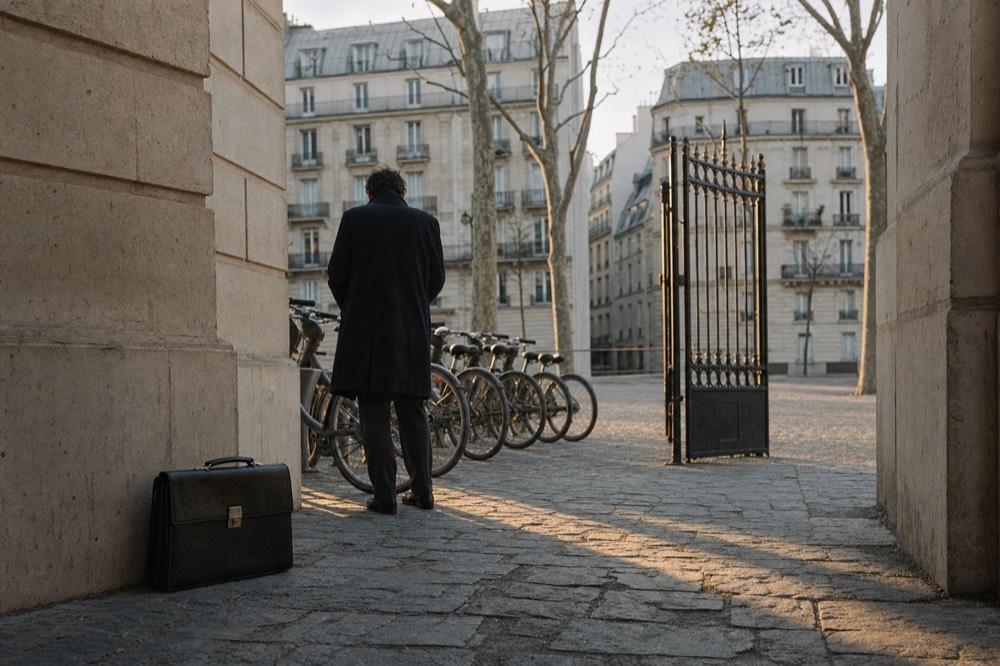
Where Are The Best Places To Ride A Velib In Paris?
The best visitor rides follow water and parks: the Seine banks through the Marais and Latin Quarter, the Canal Saint-Martin, the Bois de Vincennes edge, and the plateau paths of Belleville, all reachable from central stations and all flat enough for a mechanical bike. Montmartre is the one famous area to skip on two wheels, because the Butte is a hill of narrow streets and stairs.
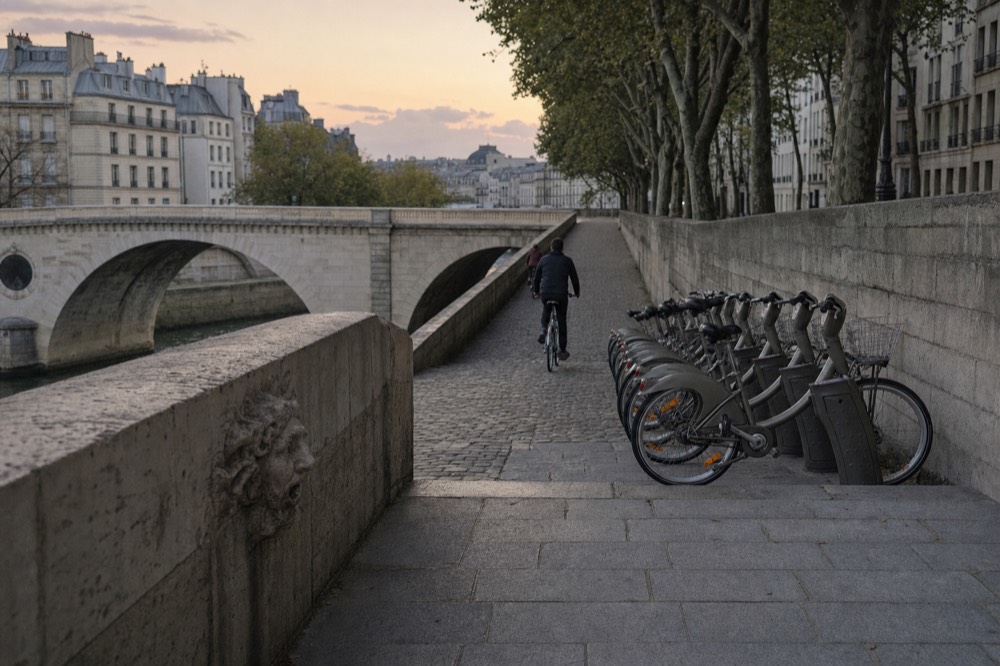
The Seine is the obvious first ride and still the best one. The car-free Rives de Seine corridor runs along both banks, and a rider can cover the distance from the Eiffel Tower to Notre-Dame in under half an hour with the river in view the whole way (see Is The Eiffel Tower Free?). This is the ride that sells visitors on the system: no ticket gates, no stairs, and a route the metro cannot imitate. On a mechanical bike it costs 1 EUR on V-Libre if you dock inside 30 minutes (checked September 2026).
The Canal Saint-Martin is the second classic, running northeast from Bastille through iron footbridges and cafe-lined quays toward the Bassin de la Villette, where the free summer swimming and Paris Plages sites sit. The Marais loop, from Hotel de Ville through Place des Vosges and back along Rue de Rivoli, is short, flat and dense with things to stop for. The Latin Quarter is better walked than ridden, its lanes being narrow and busy, but riding its edges along the river or up to the Jardin des Plantes is easy.
For a longer outing, the ride north to the Canal de l'Ourcq path or out toward the Parc de la Villette shows a Paris most visitors never see, and it is flat the whole way. South and east of the centre, the 13th arrondissement rewards a rider with two things this site cares about: the large-format street-art murals along Boulevard Vincent Auriol and Rue Jeanne d'Arc, free to ride past, and the Chinatown quarter around the Place d'Italie. The Chinatown and Street Art walk, a free bilingual walking tour run by an independent local guide and listed on GuruWalk, rated 4.94 across 16 reviews (checked September 2026), covers exactly this territory on foot, and a Velib ride out to the 13th pairs well with it.
The farthest-flung pairing on this site's roster is Enghien-les-Bains, the small spa town just outside Paris. Riding there is a commitment, so most visitors take the train and walk instead. The Small-Group Enghien walk, capped at eight people and run by an independent local guide listed on GuruWalk, rated 4.94 across 17 reviews (checked September 2026), is a free tour of the lakeside town, and it makes an easy half-day out of the city between bike days.
What Can Go Wrong With Velib, And How Do You Avoid It?
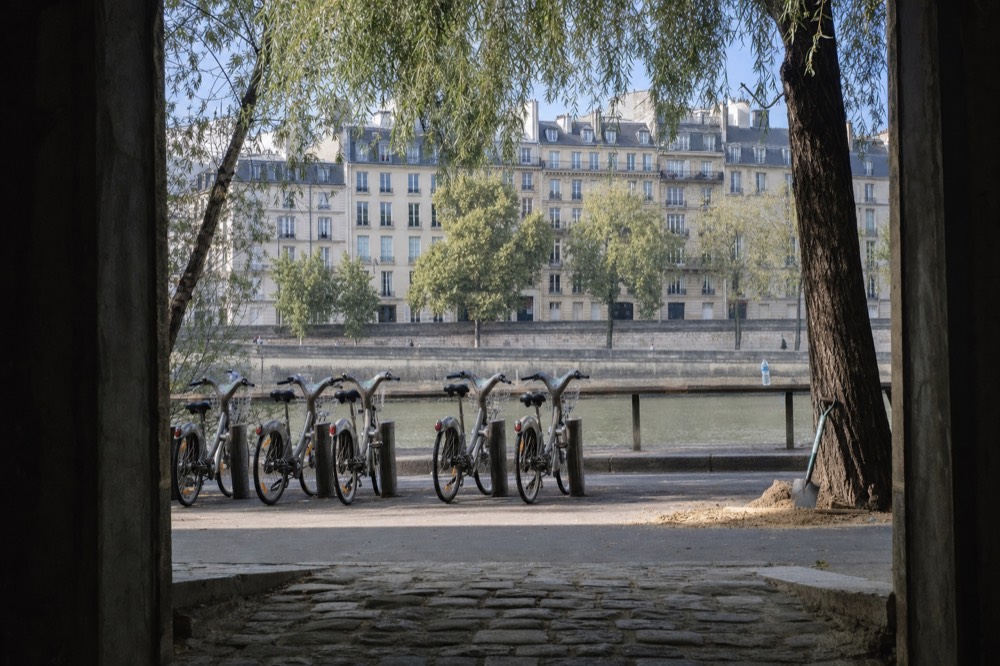
The four failures that hit tourists are arriving at a full station with no free dock, finding only expensive electric bikes, leaving a bike improperly docked so billing continues, and riding into Montmartre's hills expecting the bike to cope. All four are avoidable with the app's live map, a filter for mechanical bikes, a firm push at the dock and a bit of route planning.
The full-station problem is the most stressful because it happens at the end of a ride, when you just want to be done. The app shows free docks at every station, so aim for a station with at least three or four open slots rather than the closest one with a single gap. If a station is genuinely full, the app offers a short grace period to find another, and the map shows the nearest alternatives. Near major attractions this matters most: stations around the Louvre, the Eiffel Tower and Hotel de Ville fill and empty in waves tied to museum hours.
The electric-bike premium is the silent budget killer. On V-Libre an electric ride costs 3 EUR for the first 45 minutes against 1 EUR for 30 minutes on a mechanical bike (checked September 2026), and central stations skew electric. Filter the map in the app for mechanical bikes, and if you unlock an electric one by mistake, dock it immediately and take another. The battery indicator also matters: an electric Velib with a low charge rides like a heavy ordinary bike, and the assistance cuts out entirely below the minimum.
Improper docking is the one that costs money invisibly. The bike must click into the slot and the dock light must confirm the return, and the app must show the ride as closed. If the light does not confirm, pull the bike out and re-dock it firmly. A rider who walks away from a half-seated bike keeps the meter running, and the charges arrive on the card later with no obvious explanation.
Then there is Montmartre. The Butte is steep, its upper streets are narrow and crowded, and the famous steps cannot be ridden at all. Ride to the base at Anvers or Blanche if you like, dock there, and go up on foot or by funicular. The free walking tours of Montmartre listed on this site, run by independent local guides on GuruWalk, are a far better use of the hill than a bike is, and the Free Things To Do In Montmartre guide covers the rest of the neighbourhood for the time you spend off the saddle.
Is Velib Cheaper Than The Metro In Paris?
For short hops, yes: a 1 EUR mechanical ride under 30 minutes beats the 2.55 EUR metro ticket, and four or five such rides a day cost less than a 12.30 EUR Navigo Jour day pass (checked September 2026). For long or hilly cross-city trips, for rainy days and for anyone relying on electric bikes, the metro wins, and the two work best as a pair rather than rivals.
The arithmetic is straightforward at the single-ride level. One metro journey costs 2.55 EUR and one short mechanical Velib ride on V-Libre costs 1 EUR plus the one-time 6 EUR registration (checked September 2026). Cross the registration threshold with your seventh ride and every short hop after that is less than half a metro fare. The bus is cheaper than the metro at 2.05 EUR but still double a short bike ride, and the two ticket types do not transfer between them, which is its own argument for covering some trips on two wheels instead.
Where the comparison flips: rides over 30 minutes start stacking 1 EUR half-hours, electric rides start at 3 EUR, and a rainy February afternoon makes any fare look reasonable. A rider who takes three 50-minute electric rides in a day has spent 9 EUR or more before touching a metro gate. The honest rule is that Velib is a short-hop tool, brilliant for distances too far to walk and too close to justify the metro, and the metro remains the backbone for long, fast or weather-proof trips.
There is one genuinely free exception worth knowing about. On Nuit Blanche, the annual all-night art festival, Velib has opened the system free for the night with a published code, most recently from 18:00 on 6 June to 08:00 on 7 June 2026 with the code MGP2026. That was the third consecutive year of the free night. The festival itself moved to June in 2025 and 2026, not the October date older guides print, and the free-events calendar on this site tracks what is actually free on the Paris schedule.
One last comparison for the frugal: walking is still free, and central Paris rewards it. The distances that matter are short, the Louvre to Notre-Dame is about 1.5 km, and a day of walking between free sights costs nothing at all. Velib earns its place on the days when your feet have run out, and the metro earns it when the rain starts or the destination is far. Riders who want the full transport picture, including the airport tickets and the passes that no longer exist, will find it in our cheapest way to get around Paris breakdown, and the wider catalogue of free sights sits on the Free Things To Do In Paris homepage.
The short answers are these: tourists can register with any international bank card, the free first half hour belongs only to the paid V-Plus subscription, electric bikes cost roughly triple a mechanical ride, and a firm dock plus a glance at the app ends the billing. The details below cover each of these points in full, including the Montmartre question, which is the one hill in central Paris where the bike loses to your legs.
Common Questions About Velib For Tourists In Paris
Can tourists use Velib in Paris?
Yes. Anyone can register with an email address and an international bank card, either in the app or at a station terminal. There is no residency requirement and no French phone number needed. The practical decision is the plan: V-Libre costs 1 EUR per short mechanical ride, while the free first half hour only exists on the V-Plus subscription.
Is the first 30 minutes on Velib free?
Not on the plan most tourists pick. The free first half hour on a mechanical bike belongs to V-Plus, which costs 4.30 EUR a month. On the pay-as-you-go V-Libre account, a mechanical ride costs 1 EUR for up to 30 minutes, plus a one-off 6 EUR registration fee.
Do I need a French bank card or a Paris address?
No. A standard international payment card works for registration and for the one-off fee, and the account needs only an email address. Nothing in the system checks where you live.
Are the electric Velib bikes worth the extra cost?
Only for hilly or long routes. An electric ride starts at 3 EUR on V-Libre against 1 EUR for a mechanical bike, so three casual electric rides already approach the price of a metro day pass. Central Paris is flat, and a mechanical bike handles the Seine banks and the Marais easily.
What happens if the station is full when I want to dock?
Check the app before you arrive and target a station with several open slots. If your destination station is full, the app gives you a short grace period and shows the nearest stations with space. Always confirm the dock light and the app show the ride closed before walking away, because an improperly docked bike keeps billing.
Can I ride Velib up to Montmartre and Sacre-Coeur?
You can ride to the base, but the Butte itself is steep, narrow and stair-cut, and the bike is the wrong tool there. Dock at Anvers or Blanche and go up on foot or by funicular. The funicular costs 2.55 EUR, the same as a metro ticket, and the stairs beside it are free.