What To Beware Of In Paris?
The scams, pickpocketing hotspots and ticket traps that official sources actually document for Paris, plus what to do if something goes wrong.
What To Beware Of In Paris?
The things worth guarding against in Paris are petty theft and a short list of street tricks, not violent crime. Foreign governments consistently name pickpocketing and phone snatching as the main risks, concentrated on the metro, at major monuments and in crowded stations. The police prefecture documents a specific set of scams, from false petitions to rigged card games, and the city's most expensive trap in recent years has been counterfeit tickets for attractions that are genuinely free.
That is the honest shape of it. The UK foreign travel advice for France notes that thieves and pickpockets operate on the Paris metro, on RER lines and at mainline stations, and the US State Department's advisory describes pickpocketing and phone thefts as common in crowded places. Neither treats Paris as dangerous. Both treat it as a city where your bag matters more than your personal safety, which is a different problem and a solvable one.
The single most expensive trap is also the newest: paying for things that are free. The Times reported in February 2025 that tourists had paid up to 60 EUR for counterfeit "fast-track" Notre-Dame tickets, for a cathedral whose entry is 100 percent free (see What Is The Best Way To Tour Notre-Dame?). Anyone selling you a Notre-Dame entry ticket is selling something the cathedral gives away. That scam, and how to avoid it, gets its own section below.
A practical way to cut your exposure is simply to spend less time looking confused in the exact places where thieves work. A free walking tour run by an independent local guide, listed on GuruWalk, does that job well: you arrive at a known meeting point, join a group, and spend two hours with someone who knows which square is which. Three walks fit a first visit particularly well.
Where Does Pickpocketing Actually Happen In Paris?
Official sources name the same places over and over: the metro and RER, mainline stations, and the areas around the Eiffel Tower, Notre-Dame, the Champs-Elysees, the Louvre and the Latin Quarter. The US Embassy in France states plainly that the most likely places to be pickpocketed are close to major tourist sites. The Prefecture de Police places the false-petition approach specifically in the Latin Quarter and around Notre-Dame. None of these warnings describe violent crime.
The pattern behind every official warning is crowding plus distraction. Thieves work where people are packed together and where attention is elsewhere: at metro doors, at ticket machines, at monument photo spots. The US Embassy describes the "crush and grab", where several people swarm you at the doors of a train, and the snatch as the doors close, which the Irish Department of Foreign Affairs also flags. The embassy's advice on the last point is blunt: do not chase a pickpocket, because your wallet has usually already been passed on.
| Location | What the official source says | Source |
|---|---|---|
| Paris metro, RER lines, mainline stations | Thieves and pickpockets operate here | UK FCDO travel advice |
| Eiffel Tower, Notre-Dame, Champs-Elysees | Most likely places to get pickpocketed | US Embassy in France |
| Metro lines 1, 2 and 6, Gare du Nord | Repeatedly flagged for theft | Australian Smartraveller |
| Latin Quarter and Notre-Dame | False-petition approach named here specifically | Prefecture de Police de Paris |
| Airports and transport links to them | Bag snatching and illegal taxis flagged | Government of Canada travel advice |
The countermeasures are unglamorous and they work. Carry one card, one piece of ID and 40 to 50 euros, no more, which is the US Embassy's own rule of thumb. Keep the bag across your body rather than on a shoulder, keep the phone off the café table and out of your back pocket, and take your metro ticket out before you reach the gates so you are not opening a wallet in a crowd. The Prefecture adds one Paris-specific habit: note your phone's 15-digit IMEI number before you travel, because it lets police block the SIM and handset within four working days if it is stolen.
Which Street Scams Do Official Sources Actually Document?
The documented list is short and specific: false petitions with a clipboard, the rigged three-card or cup game known as bonneteau, people impersonating police officers, fake ticket inspectors, street ticket sellers, tailgating through metro gates, and distraction tricks at cash machines. The Prefecture de Police publishes all of these. The bonneteau is explicitly subject to legal action under Article 313-1 of the French Criminal Code.
The petition trick deserves its own sentence because it works on kindness. Someone approaches with a clipboard, asks for a signature and a donation, and while you are signing, accomplices go through your bag and pockets. The Prefecture's English-language guide for visitors states this in as many words. The same guide covers the fake charities that appear to represent recognised organisations and do not, and the fake police officers who ask to see your papers and your money: a real officer never asks for money, and carries a credit-card-sized white plastic ID marked "Police" with a blue, white and red stripe.
The bonneteau, a shell game with three cards or three cups, has real enforcement behind it. Le Parisien reported in December 2025 that nine people from a crew that ran the game at the Trocadero, at the foot of the Eiffel Tower, were sent before a Paris court, with about 300,000 euros allegedly moved to Romania. The Interior Ministry's tourist sheet gives the mechanics: a minimum 50-euro stake, two accomplices pretending to be players, and you lose every time.
| Scam | The documented method | The defence |
|---|---|---|
| False petition | You sign, accomplices pick your pockets | Refuse and keep walking, keep the bag in front of you |
| Bonneteau shell game | Two fake players, rigged outcome | Never bet, walk past |
| Fake police officer | Asks for papers and money | Real police never ask for money, ask to see the card |
| Fake ticket inspector | Demands an on-the-spot cash fine | Real inspectors wear a uniform and issue a receipt |
| Street ticket seller | Up to ten times the normal price | Buy only in stations or official channels |
| ATM distraction | Someone asks directions while an accomplice watches your PIN | Cover the keypad, refuse help, go inside if the machine swallows your card |
Two more from the official list. At cash machines, the US Embassy describes people walking up to ask for directions while you are using the ATM, and its warning sign is worth memorising: if the machine swallows your card and does not give it back, go into the bank immediately, because that is not normal. And on transport, the official Paris tourist office warns against fake ticket inspectors: authorised RATP and SNCF inspectors wear an official uniform, can take a fine by card or cash, and always issue an official receipt.
Knowing the geography helps more than knowing the tricks, because every one of these approaches depends on you standing still in a crowd. The Wartime Paris walk, a free walking tour run by an independent local guide and listed on GuruWalk, covers six stops of occupation history and meets at Metro Cité on line 4, right in the middle of the island where several of these warnings cluster; it holds a 4.76 rating across 83 reviews (checked September 2026).
The same logic applies on the Right Bank. The Time Machine Hidden-Gems Walk, also free and pay what you want at the end, starts on the parvis of the Hotel de Ville and threads the covered passages and courtyard entrances most visitors walk straight past; it runs an hour and 45 minutes and holds a 4.98 rating across 273 reviews (checked September 2026). A guide who points out which arcades are public and which are not is quietly teaching you the difference between a passage and a trap.
If occupation history is the angle that draws you to the city, the World War 2 in Paris walk is the one to book first: the Marais under the Occupation is a story the plaques on the walls only half tell, and a local guide who knows the streets will take you past the school memorials and the former arrest sites that no warning list ever mentions. It costs nothing to reserve a place, and the meeting point at Metro Cité is confirmed when you book.
Is The Notre-Dame Free Entry Ticket A Scam Magnet?
Yes, and it is the clearest example of a free Paris attraction being resold for money. Entry to Notre-Dame cathedral is 100 percent free, booking is free and optional, and no third-party platform is authorised to sell access. The cathedral's own site carries a standing fraud warning saying exactly that. The Times reported tourists paying up to 60 EUR for counterfeit fast-track tickets through mirror websites.
The mechanism, in the cathedral's own FAQ, is that some platforms, agencies and guides reserve the free tickets and then resell them at a high price. Those tickets are worthless and do not grant access. There is a tell that catches them instantly: official Notre-Dame slots open only hours or at most a day or two ahead, so anything showing availability a month out is not the cathedral. A Reddit poster in July 2025 found the official slots showing sold out a month ahead, then found a sponsored site selling the same free tickets at 25 EUR each, and the replies confirmed third-party slots are refused at the door.
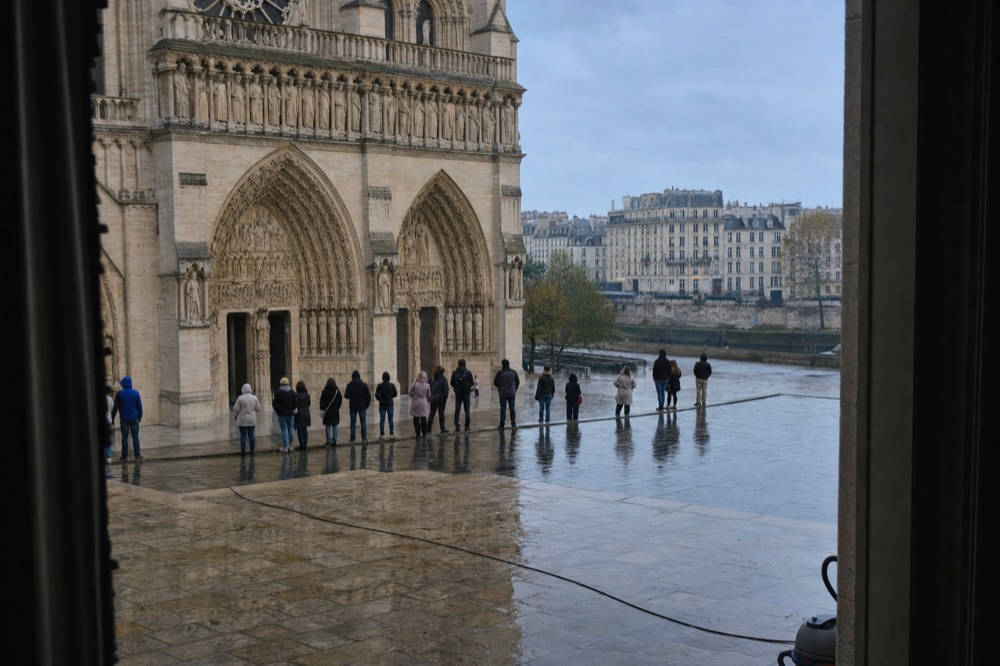
The practical rules are simple. Reserve on the cathedral's official booking site only, and only for the day before, two days before, or the same day (see How Much Does A Weekend In Paris Cost?). Walk-in entry is always possible without a reservation, with the queue on the left when facing the facade, marked with blue banners, and visitors in 2025 and 2026 reported waits of 8 to 25 minutes even when the line looks enormous. If you want the full picture of the cathedral's reopening and current access, our guide to visiting Notre-Dame today covers it in detail.
The same principle generalises. A metro ticket costs 2.55 EUR at a machine or counter (checked September 2026), and the Prefecture warns that street sellers charge up to ten times the normal price. The Louvre's two-tier 2026 pricing, 22 EUR for EEA nationals and residents against 32 EUR for everyone else (checked September 2026), has created a parallel market in "discounted" Louvre tickets that the museum does not recognise. The rule underneath all of it: in Paris, buy tickets from the machine, the counter or the attraction's own site, and from nowhere else.
What Should You Know About Taxis, Transport And Your Phone?
Three key things: illegal taxis operate at Paris airports and stations and charge far more than the official rank, so use only the rank and look for the Taxi Parisien sign on the roof. Also, a metro ticket and a bus ticket are two separate products, and using a metro ticket on a bus can draw a fine. Finally, phone snatching is the most common theft, and the Prefecture advises not holding your phone in your hand while walking.
The transport point catches people out because it changed recently. Since the 2025 fare reform a Metro-Train-RER ticket costs 2.55 EUR and a Bus-Tram ticket 2.05 EUR (checked September 2026), and they do not transfer between each other. The old carnet of ten is gone, so there is no discount for buying in bulk, and the cardboard ticket itself is being phased out. Someone offering to sell you "metro tickets" on the street is selling either an obsolete product or nothing.
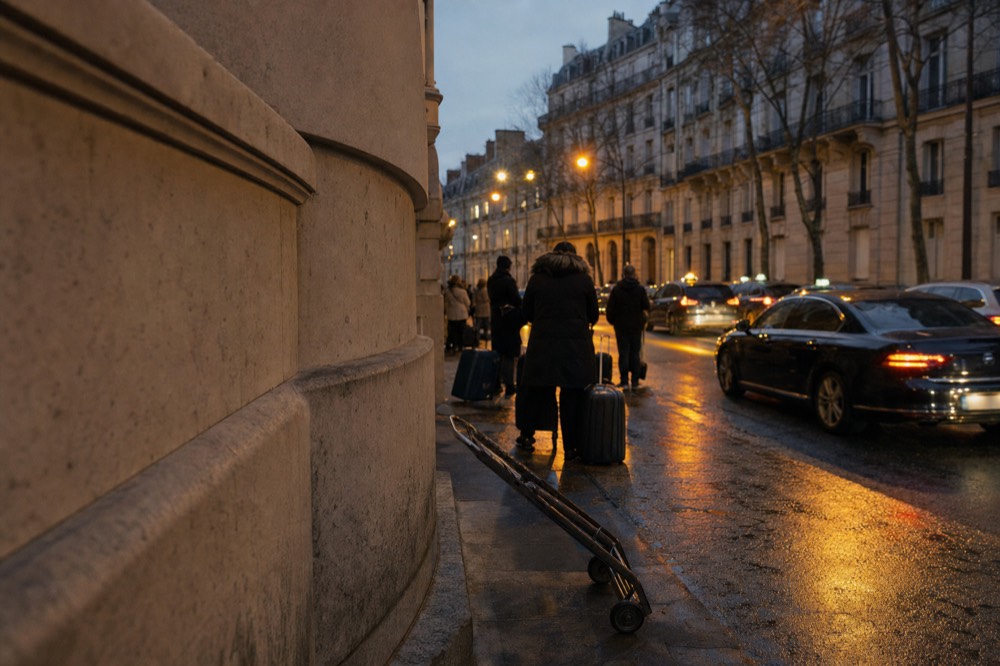
On the phone, the Prefecture's advice is concrete: avoid holding it in your hand or telephoning while walking, and take care during selfies that the phone is not grabbed out of your hand. The US Embassy adds the two-wheeler variant, advising a handbag carried under the arm away from the street. None of this requires fear, only habit. If you want a deeper read on the etiquette side of Paris, the unwritten rules that get visitors sideways looks rather than emptied pockets, our guide to what is frowned upon in Paris is the companion piece to this one.
What Should You Do If Something Is Stolen In Paris?
Call 17 for police or 112 for the European emergency number, both free from any phone. All 20 central Paris police stations are open 24 hours a day, and every one runs the SAVE system, which lets officers take a complaint from a foreign visitor and issue a receipt in the visitor's own language. For theft where the offender is unknown, you can now file the complaint itself online, in 30 languages, and foreign visitors are explicitly eligible.
The online route matters because it saves a morning. The national plainte en ligne service covers offences against property where the offender is unknown, which is almost every pickpocketing, and it is free. You receive an email when the formal record is available in your personal space, and the police may contact you to complete the statement in person. One caveat: a complaint filed online cannot be withdrawn online.
| Situation | The official route | Note |
|---|---|---|
| Theft in the street or a monument | Nearest police station, open 24 hours | SAVE gives you a receipt in your own language |
| Theft where the offender is unknown | Online complaint, 30 languages | Free, foreign visitors eligible |
| Theft in the metro | A metro officer can direct you to the nearest station | RATP can take the statement itself if you are a tourist, there was no violence, the culprit is unidentified and the loss is 1,000 euros or less |
| Stolen passport | Police complaint plus your embassy | The SAVE receipt is designed for the embassy follow-up |
Two habits make the aftermath easier. Photograph your passport and cards before you travel, and keep them in a separate bag from the originals. And do not fight back if someone grabs a bag, which is the Prefecture's explicit advice: the wallet is replaceable and the grabbing is not worth an assault. The etiquette side of the city, the greetings and the restaurant customs, is a separate subject, and the frowned-upon guide linked above covers it.
Can A Free Walking Tour Actually Help You Avoid These Traps?
Partly, yes, and not because guides are security staff. A walk with an independent local guide, listed on GuruWalk, removes the two conditions every documented scam needs: standing still looking confused, and being alone in a crowd. You meet at a named point, move with a group, and get told which squares, arcades and metro exits are which. The walks themselves cost nothing to book, and you pay the guide what you want at the end.
That model deserves one honest sentence of explanation for anyone new to it: there is no fixed price, and at the end each walker gives the guide what they think the walk was worth. If you are weighing whether that is a good deal, our honest assessment of free walking tours in Paris works through the numbers. This site, Free Things To Do In Paris, lists these walks as a directory: they are run by independent local guides and listed on GuruWalk, not operated by us.
For a first visit with safety in mind, the Stories and Secrets Landmarks Walk covers the big-monument geography in two and a half hours, holding a 4.87 rating across 249 reviews (checked September 2026), and the Every-Side Centre Walk starts at Charles de Gaulle-Etoile and runs two and a half hours with a 4.96 rating across 476 reviews (checked September 2026). Both are run by independent local guides listed on GuruWalk.
If the history angle appeals, three walks below fit the same brief from different angles: occupation history in the Marais, landmark stories in the centre, and the full sweep from the Arc de Triomphe eastward.
The short answers to the questions visitors ask most: Paris is safe by big-city standards, the main risks are pickpocketing and a documented set of street scams, counterfeit tickets for free attractions are the costliest trap, and every theft has an official reporting route, from 24-hour police stations with multilingual receipts to a free online complaint service. The details sit in the accordion blocks below.
Common Questions About What To Beware Of In Paris?
What To Beware Of In Paris?
Petty theft above all: pickpocketing on the metro and at major monuments, phone snatching, and a documented set of street scams including false petitions, the rigged bonneteau card game, fake police officers and fake ticket inspectors. Violent crime is rare. The most expensive trap is paying for things that are free, above all counterfeit Notre-Dame entry tickets.
Is Paris safe for tourists?
Yes, by big-city standards. Every official source, from the UK travel advice to the US State Department, describes a city where the risks are theft and distraction, not violence. The Canadian government notes that violent crime is rare although tourists are sometimes victims. Ordinary precautions, a crossbody bag and limited cash, cover most of it.
What is the most common scam in Paris?
The false petition, according to the Prefecture de Police: someone with a clipboard asks for your signature and money, and accomplices pick your pockets while you sign. It is documented specifically in the Latin Quarter and around Notre-Dame. The bonneteau shell game is the other officially documented street trick, with a minimum 50-euro stake and a guaranteed loss.
How do I spot a fake Paris taxi?
Licensed Paris taxis carry the Taxi Parisien sign on the roof. The Canadian government warns that illegal taxis operate at airports and stations and charge far more than official ones, and the Prefecture's rule is never to accept a ride from someone who offers their services at an airport, a station or in the street. Use the rank.
What do I do if I am pickpocketed in Paris?
Call 17 or 112, go to any police station, all 20 central ones are open 24 hours, and use the SAVE system for a receipt in your own language. If the offender is unknown you can file the complaint online in 30 languages. Do not chase the thief: the US Embassy warns your wallet has usually already been passed on.
Are Notre-Dame tickets a scam?
Any paid Notre-Dame entry ticket is a scam. Entry is 100 percent free, the optional reservation is free, and booking opens only a day or two ahead on the cathedral's own site. The Times reported counterfeit fast-track tickets selling for up to 60 EUR. If a site offers slots a month out, it is not the cathedral.