Is $1000 Enough For 4 Days In Paris?
A grounded answer to whether 1000 dollars covers four days in Paris in 2026, built from real 2026 prices for beds, transport, food and the free activities that stretch a budget.
The honest answer is yes, comfortably, if the thousand covers everything except the flights, and if you accept one hard truth about where Paris got expensive (checked September 2026). Bread is nearly flat in price. Beds are not. INSEE's June 2026 figures show food up 0.9 percent year on year and bread and cereals up just 0.1 percent, while accommodation services rose 6.3 percent (checked September 2026). A four-day budget lives or dies on the room.
Is $1000 Enough For 4 Days In Paris?
Yes, for most travellers, 1000 dollars is enough for four days in Paris in 2026, covering a mid-range room, food, transport and sightseeing, provided the flights are already paid. The deciding factor is the bed: a median Paris double room runs 192 EUR a night before city tax (checked September 2026). A cheap room leaves a wide margin and a four-star room eats the budget whole. The free layer of the city does the rest.
Start with the shape of the problem. Four days means three or four hotel nights, roughly ten to twelve journeys on public transport, twelve meals or so, and whatever sightseeing you choose (see Is Public Transport Free In Paris?). The 2026 prices are known quantities, so this is arithmetic rather than guesswork.
The accommodation line is the one that decides everything. A July 2026 tracker of 1,199 Paris hotels put the median double room at 192 EUR a night, with two-star around 130 EUR and four-star around 274 EUR (checked September 2026). The often-quoted average of roughly 350 EUR measures a different, luxury-heavy basket. On top of the room rate comes the tourist tax, which from 1 January 2026 runs 2.60 EUR per adult per night at a hostel or one-star, 3.25 EUR at two stars, and 5.53 EUR at three stars (checked September 2026). Almost nobody publishes that line, and it is real money on a cheap trip.
Run the two scenarios. A traveller in a two-star room at 130 EUR a night plus 3.25 EUR of nightly tax is spending well under half the budget on the bed across four nights, leaving a wide margin inside a thousand dollars even after a weak exchange rate. A traveller in a four-star at 274 EUR a night plus 8.45 EUR of tax has already committed more than the entire budget to the room before a single croissant is bought. The question is really a hotel question wearing a budget costume. A shorter weekend trip answers the same way, with the bed deciding the budget, the food flexing it, and almost everything worth seeing able to cost nothing (see Weekend In Paris Cost).
If you are planning the whole trip rather than just the money, our Paris on a budget guide works through the daily costs in more detail.
Where Does The Money Go After The Bed?
After the room, the three remaining lines are food, transport and paid monuments. Food can run anywhere from about 15 EUR a day on supermarket picnics to 60 EUR a day eating out twice, transport costs 2.55 EUR per metro ride with no ten-pack discount any more (checked September 2026), and the big monuments now charge 22 to 32 EUR at the Louvre depending on nationality. A disciplined day costs little beyond the bed.
Food first, because the range is enormous and the floor is genuinely low. A supermarket classic baguette runs 0.28 to 0.45 EUR, against an artisan tradition at a 1.32 EUR Paris average (checked September 2026). Paris tap water costs 4.23 EUR per cubic metre, which is 0.0042 EUR per litre, and Eau de Paris calculates 1.5 litres a day for a year at 2.32 EUR total (checked September 2026). A visitor who fills a bottle at one of the city's more than 1,200 public fountains and picnics from a bakery spends almost nothing on eating.
The ceiling is just as real. An espresso costs 1.20 to 1.50 EUR standing at the counter but 4.50 to 7.00 EUR on a tourist terrace, and the Cafe de la Paix summer 2026 terrace menu listed an espresso at 7 EUR (checked September 2026). A neighbourhood sandwich ran 6.80 to 11 EUR in a March 2026 survey, and lunch formules in the 9th to 11th sat around 18 to 19 EUR (checked September 2026). One visitor in a September 2025 thread set a 60 EUR per person per day food cap and commenters called that a generous budget, with breakfast at 5 to 10 EUR plus a 20 EUR lunch formule named as realistic.
Transport is the second lever, and 2026 changed it. The single metro-train-RER ticket costs 2.55 EUR, and the old cardboard carnet of ten was abolished, so ten rides now cost 25.50 EUR with no discount (checked September 2026). A Navigo Jour day pass costs 12.30 EUR, so it pays off from the fifth ride. The trap is Paris Visite at 30.60 EUR for one day, which is only rational if that day includes an airport run, since the Navigo Jour excludes the airports. Our piece on the cheapest way to get around Paris covers the ticket arithmetic in full.
The third line is the monuments, and here the 2026 change matters. The Louvre moved to two-tier pricing on 14 January 2026: 22 EUR for EEA nationals or residents, 32 EUR for everyone else (checked September 2026). A non-European visitor has gone from 17 to 22 to 32 EUR in two years. Sainte-Chapelle and the Palais Garnier visit adopted the same split. The Musee d'Orsay did not, staying at 16 EUR online and 14 EUR at the door (checked September 2026). The counter-intuitive part worth knowing: at Orsay the door price is cheaper than the online price.
What Can You Do In Paris For Free Every Day?
Quite a lot: eleven of the fourteen City of Paris museums keep their permanent collections free every opening day with no booking, Notre-Dame cathedral entry is 100 percent free, Sacre-Coeur is free and open 06:30 to 22:30 every day of the year, and the Louvre is free for everyone on the first Friday of the month after 18:00 except in July and August, so you can fill four days without buying a single monument ticket.
The free museum layer is stronger than most visitors expect. The Petit Palais, the Musee Carnavalet, the Musee d'Art Moderne and eight other Paris Musees sites are free every opening day, no first-Sunday condition, no booking. The three exceptions that charge are the Catacombes at 31 EUR, the Crypte archeologique and the Palais Galliera (checked September 2026). The Catacombes price is worth knowing precisely because it appears on so many itineraries: 31 EUR is now a real line item, not a rounding error.
Notre-Dame is the other pillar. Entry is completely free, the reservation is free and optional, and the cathedral's own site carries a standing warning that any paid entry ticket is a scam, because counterfeit fast-track tickets have been sold for up to 60 EUR. The Towers are separate at 16 EUR and the Treasury at 12 EUR, but the cathedral itself costs nothing. Sacre-Coeur likewise, open 06:30 to 22:30 every single day, with the basilica noting a 10 to 15 minute wait between 10:30 and 17:00 (checked September 2026).
The free layer goes well beyond monuments. The Galeries Lafayette rooftop terrace is free with no ticket, the Institut du Monde Arabe panoramic terrace is free Tuesday to Sunday, Pere-Lachaise cemetery is free, and about a quarter of the 550-plus City parks stay open 24 hours. There are 17 free sparkling-water fountains and roughly 1,500 shops carrying a sticker meaning they will refill your bottle with no purchase required. Our free museums guide lists the permanently free sites building by building, and this is the core of what Free Things To Do In Paris documents across the whole site.
How Do Free Walking Tours Fit A $1000 Budget?
Perfectly, because they cost nothing to book. These are walks run by independent local guides and listed on GuruWalk: there is no fixed price, and at the end each walker gives the guide what they think the walk was worth. Four days of guided neighbourhood walks can therefore cost whatever you decide, from a few euros to a proper thank-you, which makes them the most flexible line in the entire budget.
The model deserves one honest paragraph. Booking is free, no card is taken, and the guide is paid at the end by the group. GuruWalk's own Paris pages carry a guideline of 15 EUR to 50 USD per participant, while GuruWalk's help article for guides says a good guide earns an average of 10 euros per traveller, and the official regional tourism body puts a typical tip at around 12 EUR. Three sources, three different figures. There is no single going rate, and any page that prints one is inventing it.
Montmartre is the natural fit for a budget trip, because the neighbourhood itself is free to walk and the views cost nothing. The Walkative! Montmartre, 5 Stops walk runs 2 hours and 15 minutes in English from Blanche, rated 4.72 across 1,484 reviews on GuruWalk (checked September 2026). It is a free walking tour run by an independent local guide, listed on GuruWalk, and it covers the village streets around Sacre-Coeur that a first-time visitor would otherwise wander blind.
For a deeper art-focused angle, the Bilingual Art and Bohemia Walk in the same neighbourhood runs 2 hours and 30 minutes in English and Spanish, rated 4.97 across 1,001 reviews (checked September 2026). Same model: free to book, pay what you want at the end. Doing both walks across two different days gives you two guided hours of Montmartre for a total outlay you set yourself.
One 2026 rule change is worth knowing before you book anything Notre-Dame related. From 1 July 2026, every guided tour of the cathedral led by an external guide requires prior booking and cathedral-hired audio headsets, regardless of group size, with headset hire priced 30 to 45 EUR by group size (checked September 2026). A casual free walking tour cannot simply guide you inside Notre-Dame any more. The cathedral instead runs its own volunteer-led free walks from the north tower side, which is a separate thing from the commercial pay-what-you-want products.
What Could A Realistic 4-Day Budget Actually Look Like?
A realistic four-day Paris budget can land comfortably under 1000 dollars: a two-star room at 130 EUR per night plus the 3.25 EUR city tax, bakery breakfasts, one sit-down lunch daily, a Navigo Jour on heavy days, free museums, and free walking tours with a 12 EUR tip each. That still leaves room for one paid monument and a decent dinner, while a four-star room alone would blow the whole budget.
Here is a worked table using only the 2026 figures above, for one person, four days, three nights in a two-star room:
| Line item | Figure used | Basis |
|---|---|---|
| Two-star room, per night | 130 EUR (checked September 2026) | median tracker figure |
| Tourist tax, per adult per night | 3.25 EUR (checked September 2026) | two-star rate from 1 January 2026 |
| Bakery breakfast, croissant plus counter espresso | 1.22 EUR plus 1.50 EUR (checked September 2026) | Paris averages |
| Sit-down lunch formule | 18 to 19 EUR (checked September 2026) | 9th to 11th arrondissements |
| Supermarket baguette for a picnic | 0.45 EUR (checked September 2026) | large-retail classic |
| Navigo Jour day pass | 12.30 EUR (checked September 2026) | unlimited travel, airports excluded |
| Free walking tour tip | around 12 EUR | Visit Paris Region figure, no fixed price |
| Musee d'Orsay at the door | 14 EUR (checked September 2026) | cheaper than the 16 EUR online price |
| Tap water and public fountains | free | more than 1,200 fountains citywide |
| Free museums, Notre-Dame, Sacre-Coeur, parks | free | every opening day, no booking |
Add those lines up yourself against the day's exchange rate and the total lands well below the thousand-dollar ceiling, leaving a cushion for a nicer dinner, a second paid monument, souvenirs or a bad week for the dollar. Swap the two-star room for a hostel dorm and the total drops further. Swap it for a four-star and the bed alone takes the budget to breaking point before food. The free layer of Paris does not compensate for a luxury bed.
Two cautions keep this honest. First, these are self-built scenarios, not a survey: real travellers report cash spending from under 20 EUR to 220 EUR over a week, but those are cash figures, not total budgets. Second, the dollar figure depends on the exchange rate on the day you book, which no Paris page can promise you. The euro costs above are the fixed part of the equation.
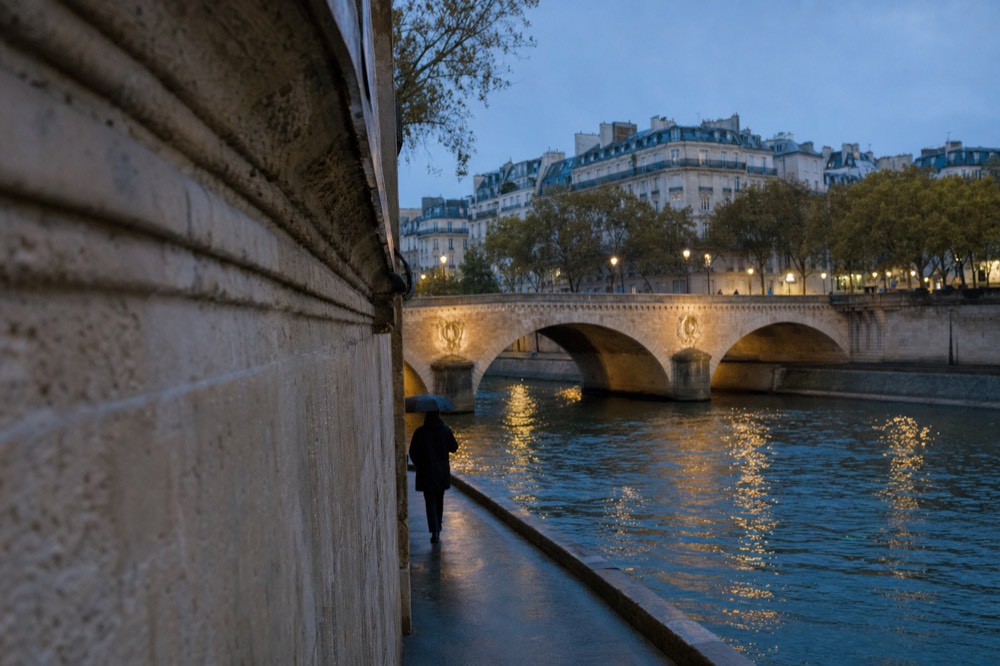
If you want to stretch the sightseeing further, the walks below cover three different corners of the city, all free to book and all pay-what-you-want at the end.
The short version: yes, with the flights excluded and the room chosen wisely. The median Paris double room runs 192 EUR a night, two-star rooms sit around 130 EUR, and the free layer of museums, cathedrals, parks and pay-what-you-want walking tours absorbs most of the sightseeing cost. The questions below cover the details travellers ask most.
Common Questions About Whether $1000 Is Enough For 4 Days In Paris
Is $1000 (checked September 2026) enough for 4 days in Paris?
Yes, for most travellers, as long as flights are paid separately and the room is mid-range or cheaper. The median Paris double room runs 192 EUR a night, but two-star rooms around 130 EUR keep four days comfortably inside the budget once you use the free museums, free cathedrals and pay-what-you-want walking tours.
How much does a hotel cost per night in Paris in 2026?
The median double room across 1,199 tracked hotels is 192 EUR before tourist tax, with two-star around 130 EUR and four-star around 274 EUR (checked September 2026). The tourist tax adds 2.60 to 8.45 EUR per adult per night depending on the category.
Is food expensive in Paris?
It can be, but the floor is very low. A supermarket baguette costs 0.28 to 0.45 EUR, tap water is effectively free, and an espresso at the counter is 1.20 to 1.50 EUR. Eating two restaurant meals a day pushes food toward 50 to 60 EUR, which is a choice rather than a necessity.
Can you do Paris without paying for any attractions?
Largely, yes. Eleven City of Paris museums are free every opening day, Notre-Dame and Sacre-Coeur entry are free, the major parks and viewpoints are free, and the free walking tours listed on GuruWalk cost nothing to book. The Catacombes and the Louvre are the two big-ticket items people usually choose to pay for.
How much should I tip on a free walking tour in Paris?
There is no single rate. Official sources give figures from about 12 EUR to 15 EUR to 50 USD per person, and one operator says most guests give 10 to 50 EUR. Decide based on the walk's length and quality; two hours of good guiding deserves a proper thank-you.
What is the biggest waste of money in Paris?
Three stand out in 2026: buying a Paris Visite pass at 30.60 EUR a day when a Navigo Jour costs 12.30 EUR, paying for a Notre-Dame entry ticket when the cathedral is free and any paid ticket is counterfeit, and drinking coffee on a monument-facing terrace at 4.50 to 7 EUR instead of at the counter for under 2 EUR.