Are Libraries In Paris Free?
Yes, entry to Paris libraries is free and needs no card. Which ones you can walk into, what costs money, and where the Bpi and the Salle Ovale fit in.
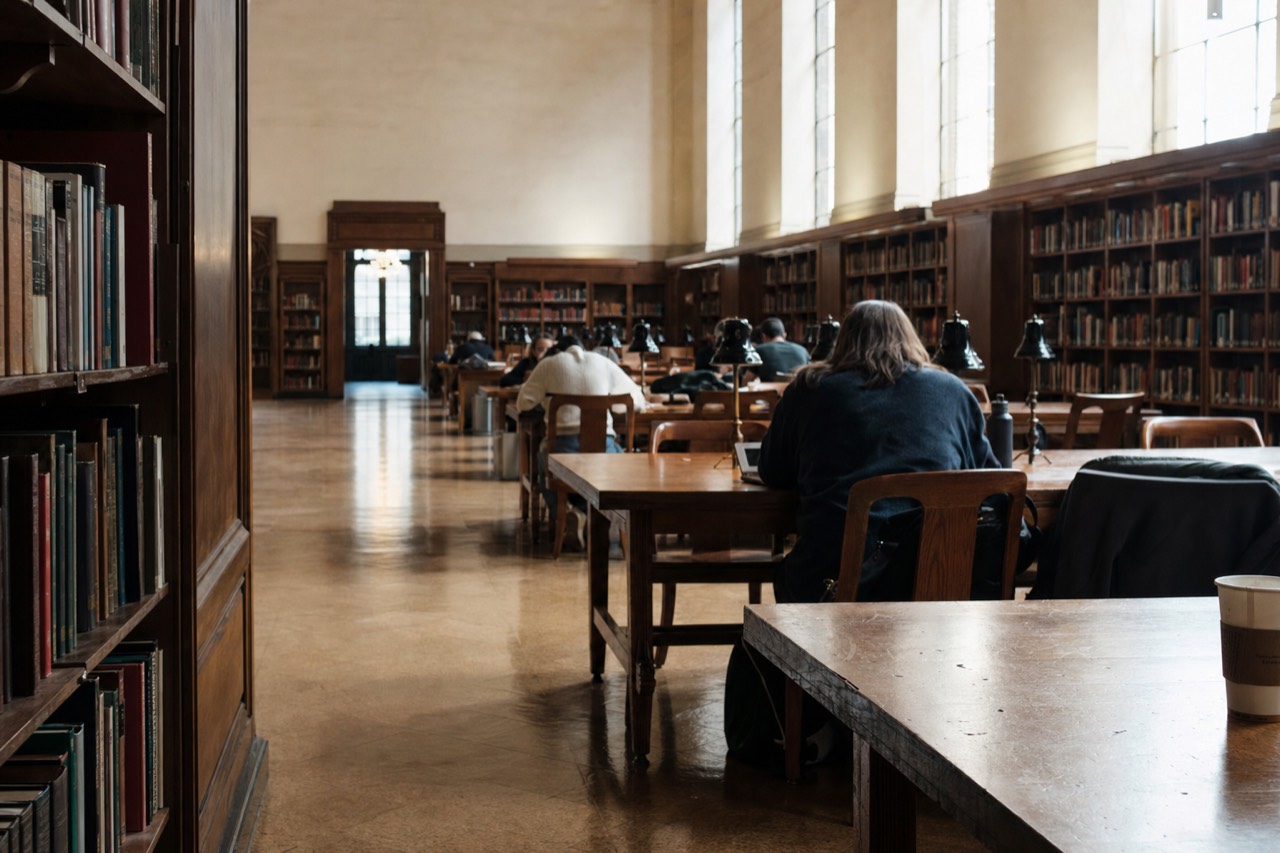
Paris runs one of the most open library systems of any major city. The libraries' own regulation states it in Article 1: the libraries of the City of Paris are places of welcome, open to all, freely and free of charge. That is not a marketing line, it is the operating rule, and it applies to visitors exactly as it applies to residents. A tourist can walk into a City of Paris library, sit down, read, use the free wifi and shelter from rain or heat without registering, without a card and without paying anything (see Does Paris Have Free Public WiFi?).
The nuance is what "free" covers. Entry, seating, reading on site, wifi and even registration are free. Borrowing music CDs and DVDs carries an annual charge, and the two great national reading rooms, the BnF's Salle Ovale and the Bpi, each have their own rules worth knowing before you plan a visit. This page answers the question in full, from the municipal network to the national institutions, with the current figures for each.
Are Libraries In Paris Free?
Yes. Entry to every City of Paris library is free and requires no card, no registration and no payment, under the libraries' own regulation, which states they are open to all, freely and free of charge. A visitor can sit, read and use the free wifi. The only paid element is borrowing CDs and DVDs, at 30.50 EUR a year for CDs and 61 EUR for CDs plus DVDs (checked September 2026), waived for minors and social-assistance recipients.
That regulation is the whole answer in one sentence, and it is worth reading the exact framing. The libraries' own rule distinguishes two things: free access for everyone, and registration, which is only needed for borrowing and certain services. Registration itself is also free and is explicitly open to non-Parisians on presentation of an ID document. So the distinction that matters is not resident versus visitor, it is sitting in the building versus taking something home.
The scale is larger than most visitors expect. The City of Paris describes 68 libraries: 58 lending libraries, 10 heritage and specialised libraries, and 5 associated libraries, spread across 82,000 square metres of reading space, with over 2.4 million printed books across the lending network and about 4,800 cultural events a year (checked September 2026). The libraries' own site currently lists 58 lending and 15 heritage and specialised libraries, so the City's English summary page and the institution's own list disagree on the split; the total of around 70 is the safe figure to carry in your head.
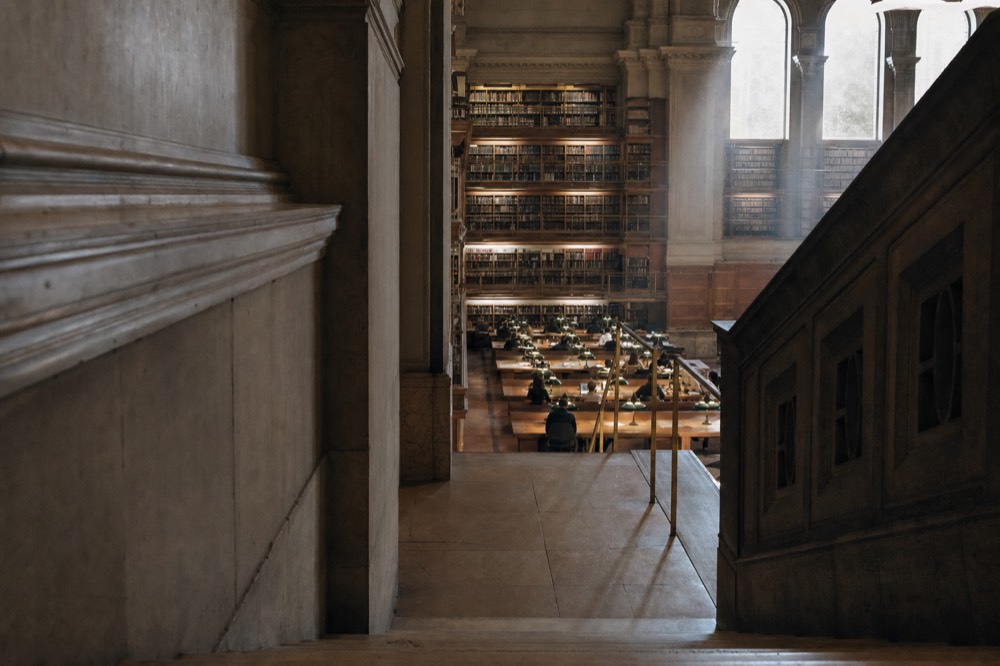
What this means on a practical Paris trip: a library is a free indoor stop in almost every arrondissement, and unlike museums there is no queue, no ticket and no free-day calendar to track. If you are building a day around a neighbourhood, a library pairs naturally with a free walking tour. In Montmartre, for instance, a free walking tour run by an independent local guide and listed on GuruWalk covers the art and bohemia of the Butte, and a library stop afterwards costs nothing (see Free Paris For Students: What Costs Nothing On A Student Budget).
The three walks above are all free to book and pay what you want at the end, the standard model for walks listed on GuruWalk. They cover three very different Parises: the painters' Montmartre, the Revolution, and the filming locations of a certain streaming comedy. A library, meanwhile, covers a fourth Paris, the everyday one, and it is the only one of the four that is open whatever the weather and however early you arrive.
Which Paris Libraries Can You Walk Into Without Paying?
Every one of the roughly 70 City of Paris libraries, plus the BnF Salle Ovale and the Bpi, can be entered free. The municipal network needs no card at all. The Salle Ovale, with more than 20,000 open-shelf volumes and 160 seats, is open to everyone in free and open access, and the Bpi requires no registration, just a QR scan or a kiosk ticket at the door.
The walk-in rule is the part visitors find hardest to believe, because so many capital cities gate their libraries behind membership. Paris does not. The municipal regulation's first article opens the buildings to all, freely and free of charge, and only lending and certain services require prior registration. In practice that means you can treat a Paris library the way you would treat a park: a free place to be.
The two national reading rooms work slightly differently but arrive at the same answer. The Salle Ovale at the BnF's Richelieu site, at 5 rue Vivienne in the 2nd, describes itself as open to all in free and open access, with more than 20,000 volumes on open shelves, including a collection of more than 11,000 comics and graphic novels, and 160 reading seats (checked September 2026). The Bpi, the big public reference library, needs no registration either: you scan a QR code from its app or take a kiosk ticket valid for 20 minutes, and entry is free.
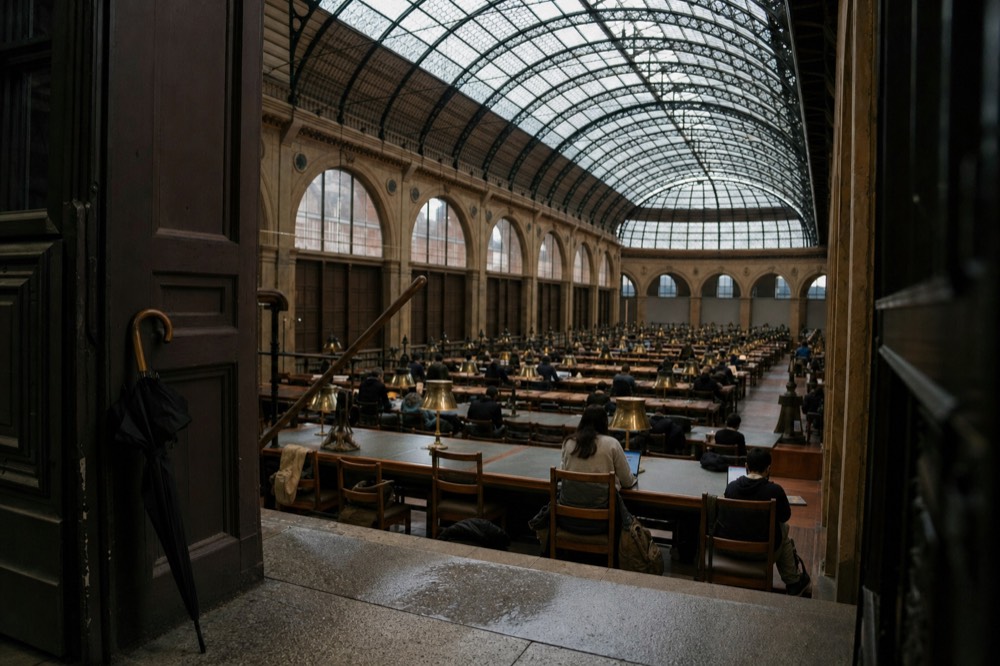
One caution before you build a day around the Bpi: it has moved. The Centre Pompidou closed on 22 September 2025 for a renovation running to 2030, and the Bpi relocated with it, reopening on 25 August 2025 at the Lumiere building, 40 avenue des Terroirs de France in the 12th arrondissement. Anyone turning up at the Beaubourg site expecting a free library will find a building site. A ventilation problem also caps the temporary building at 950 people, so entry is regulated at busy times, above all weekends and Mondays.
If your day pairs better with a walk than a reading room, the free-tour side of Paris works the same way: no payment to book, and you pay the guide what you think the walk was worth at the end. The Bilingual Art and Bohemia Walk, a free walking tour run by an independent local guide and listed on GuruWalk, runs 2 hours and 30 minutes in English and Spanish and holds a 4.97 rating across 1,001 reviews (checked September 2026). It meets in Montmartre, a neighbourhood whose own free attractions are covered in our guide to free things to do in Montmartre.
What Is Free Inside A Paris Library?
Seating, reading on site, wifi and events are all free. Paris Wi-Fi runs in every City of Paris library, in two-hour sessions you can renew without limit, and the network carries 314 municipal sites with 1,024 access points in the City's live open-data file (checked September 2026). Self-service computers, about 930 stations, are a different case: they require a library card and are capped at two hours a day.
The wifi is the genuinely useful free service for a visitor. The connection path is simple: select the network named PARIS_WI-FI_ followed by a number, open a browser, fill the portal form, accept the terms and click "ME CONNECTER". Sessions last two hours, then cut off, and you can reconnect immediately, unlimited times, at any of the sites. The service runs 07:00 to midnight, and indoor sites follow the venue's opening hours.
The computers are where visitors get caught out. The libraries' own wifi page states that the self-service computer stations require a library card, with a two-hour daily cap, one hour for under-12s. Since registration is free and open to non-Parisians on ID, a determined visitor could register and use them, but the honest line is: walk in and use the wifi on your own device, and treat the PCs as a members-only service.
| Service | Free? | What you need |
|---|---|---|
| Entering and sitting in a City library | Yes | Nothing |
| Reading books and press on site | Yes | Nothing |
| Paris Wi-Fi on your own device | Yes | A browser and the portal form |
| Self-service computers | Yes, but card-only | Free registration on ID |
| Registering to borrow | Yes | ID document and the form |
| Borrowing print books, e-books, language methods | Yes | Free registration |
| Borrowing CDs | No | 30.50 EUR a year (checked September 2026) |
| Borrowing CDs and DVDs | No | 61 EUR a year (checked September 2026) |
The CD and DVD charge is the single paid line in the whole municipal system, and it is waived for minors and for people on French minimum social benefits. Everything else in the registration offer, books, e-books, magazines, comics, sheet music, spoken-word CDs and language methods, is listed as free. For a visitor, none of this matters much: the free tier, entry plus seating plus wifi, is the tier you can actually use on a trip.
Can Tourists Register At A Paris Library?
Yes. Registration is free and the libraries state plainly that they are free and open to all, adults or children, Parisians or non-Parisians. You need an identity document and the registration form. The basic "Lire" level, covering books, e-books, magazines, comics, sheet music and language methods, is listed as free.
The "Parisians or non" wording is the libraries' own, on their registration page, and it settles the question tourists usually ask. There is no residency requirement for the free borrowing tier. The catch is practical rather than legal: borrowing is only useful if you will still be in Paris to return the items, so most short-stay visitors register only if they want the computer access or a long stay.
Registration is done in person, at a library, with your ID. If you are planning a longer stay, or a working trip, the free registration plus the free wifi makes a Paris library a genuinely usable free office. The Bpi is even more generous on that front: it does not lend at all, but its workstations, wifi and power sockets are free to everyone with no registration, and LibreOffice is installed on every workstation.
For a short visit, the better plan is to treat libraries as free shelter and free culture rather than a borrowing service. The events calendar is part of that: about 4,800 cultural events a year run across the network (checked September 2026), and they are open to the public on the same free-entry terms as the buildings themselves.
Which Libraries Are Open On Sunday In Paris?
Ten City lending libraries open on Sunday, against a general municipal pattern of Tuesday to Saturday. The ten are Francois Truffaut, Canopee, Francoise Sagan, Helene Berr, Jean-Pierre Melville, Marguerite Yourcenar, Edmond Rostand, Robert Sabatier, James Baldwin and Marguerite Duras (checked September 2026).
Sunday openings are the detail that makes the free library system usable on the day of the week when most other free indoor options, the museums that charge, the shops, are at their most crowded. The ten named libraries are spread across the city rather than clustered in the centre, so the practical move is to check which one is nearest your Sunday plans before you set out.
The Salle Ovale adds a Sunday option of a different kind. Its hours are Tuesday 10:00 to 20:00 and Wednesday to Sunday 10:00 to 18:00, closed Monday, with closures on public holidays and on Easter and Pentecost Sundays (checked September 2026). The Bpi is open weekends too, 11:00 to 22:00 on Saturdays, Sundays and public holidays, closed Tuesdays and 1 May, though its 950-person capacity cap means weekend entry is regulated and the library's own advice is to arrive after 17:00 on weekends.
That heatwave role is worth knowing in summer. The City maps more than 1,400 cool-off points, and libraries are part of the list: Canopee, Francois Truffaut, Virginia Woolf, James Baldwin and others are named cooled libraries a visitor can walk into. On a 35-degree afternoon, a free air-conditioned reading room beats a paid attraction.
Is The BnF Salle Ovale Free To Visit?
Yes, the Salle Ovale is open to everyone, free, with open access, at 5 rue Vivienne in the 2nd arrondissement. It holds more than 20,000 volumes on open shelves, including more than 11,000 comics and graphic novels, and 160 reading seats. Hours are Tuesday 10:00 to 20:00 and Wednesday to Sunday 10:00 to 18:00, closed Monday (checked September 2026).
The Salle Ovale is the most beautiful free interior on this list, a 19th-century reading room inside the BnF's Richelieu palace, and it is one of the few grand Paris interiors with no ticket, no queue and no camera ban worth worrying about. You walk in. That is the entire procedure.
The rest of the Richelieu site is not all free. The BnF museum and the temporary exhibitions are ticketed, and booking is strongly advised for those. Free site discovery, garden, cafe and bookshop access is listed separately from the ticketed parts. People with a disability and their companions get priority and free access to the museum, exhibitions and reading rooms. The distinction to remember: the Salle Ovale is the free room, the museum is the paid one, and both sit in the same building.
Metro access is easy: lines 3 at Bourse, 1 and 7 at Palais-Royal-Musee du Louvre, and 7 and 14 at Pyramides. That puts the Salle Ovale within a short walk of the Louvre, which makes it a natural free stop on a day built around the question of whether the Louvre is free, a page whose answer, the first Friday evening rather than any Sunday, surprises most visitors.
Where Is The Bpi Now That The Pompidou Is Closed?
The Bpi is at 40 avenue des Terroirs de France in the 12th arrondissement, in the Lumiere building, where it reopened on 25 August 2025 after the Pompidou closed for works to 2030. Entry is free, no registration is needed, and hours are 12:00 to 22:00 on weekdays and 11:00 to 22:00 on weekends, closed Tuesdays and 1 May, with a 950-person capacity cap (checked September 2026).
The move matters because older advice, including a lot of printed guidebooks, still sends people to the Beaubourg plateau. The Pompidou building shut on 22 September 2025 and stays shut until 2030, with works starting in early 2026. The Bpi did not close with it: the library relocated, and its own pages state it returns to the Centre Pompidou in 2030.
Inside, the Bpi is a reference library, not a lending one: paper documents are consulted on site only. It is free, it needs no registration, and it offers free internet either from its own workstations or from your own device on the wifi-bpi network, with power sockets on the work tables. The bag rule is the one detail that catches visitors: entry is refused for bags larger than 40 cm by 55 cm by 20 cm, so this is not a luggage stop.
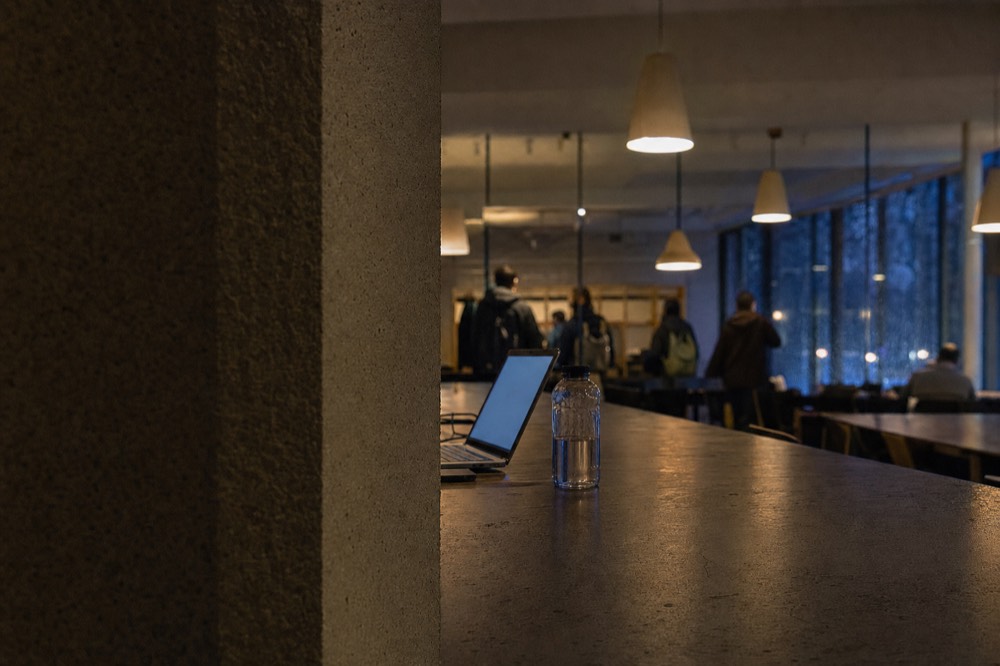
The Bpi's own timing advice is worth copying: come on weekdays and early in the day, arrive after 17:00 at weekends, and expect crowds in May, June and the Christmas holidays. The Affluences app shows live occupancy, which matters when the building caps at 950 people.
How Do Free Libraries Fit Into A Free Day In Paris?
A Paris library is the most flexible free indoor stop in the city: no ticket, no booking, no free-day calendar, open hours that include Sunday at ten named branches, and free wifi everywhere. It pairs with free walking tours, which are also free to book and pay what you want, and with the free municipal museums, whose permanent collections are free every opening day.
The comparison with museums is the useful one. Eleven of the fourteen Paris Musees sites keep their permanent collections free every opening day, with no booking, which is a better deal than the monthly free Sundays at the national museums. But even the free museums have queues at peak times. A library never does. On a rainy Tuesday in November, the Salle Ovale is arguably the best free hour in Paris.
The walking-tour pairing works because both run on the same honour model. A free walking tour run by an independent local guide, listed on GuruWalk, costs nothing to book, and at the end each walker gives the guide what they think the walk was worth. There is no fixed price and no payment at checkout. If you want to understand that model before you try it, our piece on whether free walking tours in Paris are worth it breaks down the economics honestly, including what the operators themselves say a fair tip is.
For a worked day, take the Champs-Elysees. The avenue itself is free to walk, and a free walking tour of the glamour and history of the Champs-Elysees, run by an independent local guide and listed on GuruWalk, covers it in 2 hours from Place de la Concorde, holding a 4.59 rating across 71 reviews (checked September 2026). After the walk, the nearby free options include the Tuileries Garden and the Louvre courtyards, and the Salle Ovale sits a short walk further east. This is the pattern Free Things To Do In Paris builds its whole directory around: the free city is real, it is large, and almost nobody needs to be told where the paid one is.
The Champs-Elysees walk and the library system sit at opposite ends of the free-Paris spectrum, and that is the point: one gives you the postcard city, the other gives you the city Parisians actually use. A good free week uses both. The library gives you shelter, wifi and silence; the walks give you the stories; the museums and churches fill the gaps, and the only thing you should never do is pay a third party for something the city gives away.
The short answers are these: Paris libraries are free to enter with no card, the wifi needs no registration, the only paid service is borrowing CDs and DVDs, and both national reading rooms, the Salle Ovale and the Bpi at its temporary 12th-arrondissement home, stay free to everyone. The questions below cover the details visitors ask about most often, from Sunday openings to what the Pompidou closure changed.
Common Questions About Free Libraries In Paris
Are libraries in Paris free?
Yes. Entry, seating, reading on site, wifi and registration are all free, and no card is needed to walk in. The only paid element is borrowing CDs and DVDs, at 30.50 EUR a year for CDs and 61 EUR for CDs plus DVDs, waived for minors and social-assistance recipients.
Do I need a library card to enter a Paris library?
No. The libraries' own regulation states they are open to all, freely and free of charge. A card is needed only for borrowing and for the self-service computers, not for entering, sitting, reading or using the wifi.
Can tourists use the computers in Paris libraries?
Only with a free registration. The self-service computers require a library card and are capped at two hours a day, one hour for under-12s. The wifi needs no card and is the better option for a visitor with a phone or laptop.
Is the BnF free to visit?
The Salle Ovale at the Richelieu site is free and open to everyone, with more than 20,000 open-shelf volumes and 160 seats. The BnF museum and temporary exhibitions in the same building are ticketed.
Can I visit the Bpi at the Centre Pompidou?
No. The Pompidou building closed on 22 September 2025 for works to 2030, and the Bpi moved to 40 avenue des Terroirs de France in the 12th arrondissement, where entry is still free with no registration.
Are Paris libraries open on Sunday?
Ten City lending libraries open on Sunday: Francois Truffaut, Canopee, Francoise Sagan, Helene Berr, Jean-Pierre Melville, Marguerite Yourcenar, Edmond Rostand, Robert Sabatier, James Baldwin and Marguerite Duras. The Salle Ovale and the Bpi are also open on Sundays.